

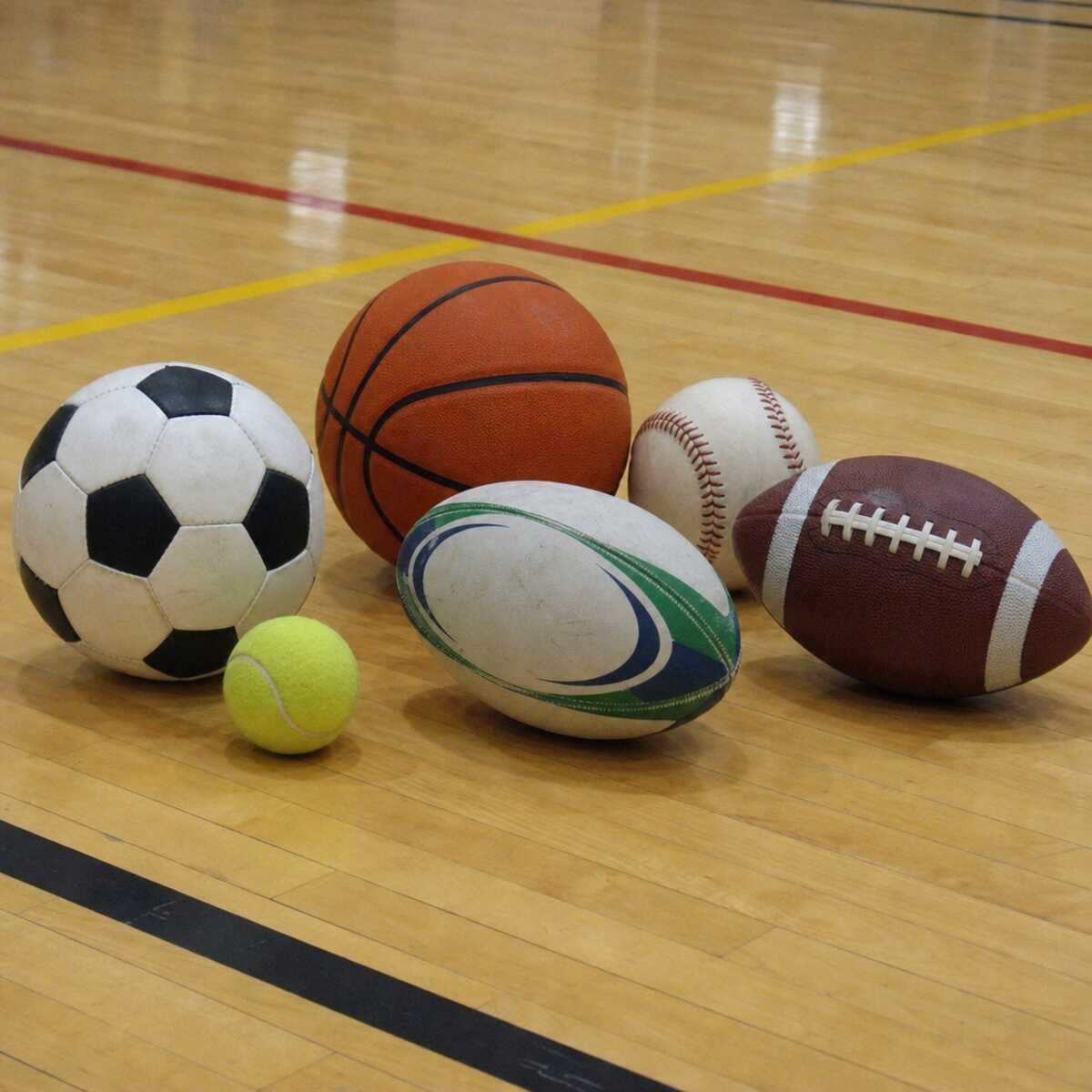

Game balls have changed because sports themselves have changed. As rules became more formal, playing surfaces more specialized, and athletes more precise, the ball moved from a rough object of play to a carefully engineered piece of equipment. This article explains how materials, design, standards, and practical selection criteria shape the sports balls people use in competition, training, recreation, and even digital ball games. Uncover the best info about situs toto.
Why have game balls changed so much?
Game balls have evolved because every sport asks the ball to solve a different problem: fly predictably, bounce consistently, grip well, survive impact, remain safe, and satisfy a written rule. Early balls often depended on available natural materials, but modern equipment is shaped by manufacturing, testing, governing-body standards, and the expectations of players who notice small differences in touch, speed, rebound, and control.
That broad pattern appears across many sports. A soccer ball must remain round, resist water, and respond cleanly to the foot. A basketball must rebound from hardwood with enough regularity for dribbling and shooting. A baseball must be firm, small, and consistent enough for pitching, batting, and fielding. A rugby ball or American football must support carrying, kicking, gripping, and passing while retaining an elongated shape. The phrase “game balls” may sound simple, but it covers a long history of design decisions.
The most useful way to understand that history is to connect the ball to the game. A ball is never merely an object; it is a rule, a technology, and a teaching tool. When the ball changes, the style of play changes with it.
Early ball games and natural materials
The desire to play balls is ancient, and different societies solved the material problem in different ways. In Mesoamerica, cultures played ball games with rubber balls, a remarkable technological advantage because rubber produced bounce in a way many other natural materials could not. The Metropolitan Museum of Art notes that Mesoamerican cultures used rubber balls in games that were both recreational and symbolically important, while FIFA Museum describes Mesoamerican balls as sturdy and bouncing because they were made from the region’s abundant rubber.
Other traditions used stitched leather, stuffed fabric, inflated bladders, or combinations of animal and plant materials. These balls were rarely uniform by modern standards. Their weight, roundness, and rebound depended on craft skill, weather, wear, and the materials available to the maker. A ball made for a village contest, schoolyard game, or informal kicking game did not need laboratory consistency; it needed to be usable, repairable, and recognizable as the center of play.
This early period teaches a useful lesson: equipment begins as adaptation. People did not first invent universal standards and then play games. They played with what they could make, and over time, recurring problems encouraged better design. If a ball absorbed water and became heavy, players needed improved covers. If a bladder lost shape, makers needed better inflation systems. If a ball bounced unpredictably, rules and techniques adapted until manufacturing could catch up.
The move from craft object to regulated equipment
The modern sports ball emerged when organized sport demanded fairness across locations. A match in one town needed to resemble a match in another. That meant the ball could no longer be only a local craft product; it had to be measured, inspected, and repeatable.
Soccer offers a clear example. The current IFAB Law 2 states that the ball must be spherical, made of suitable material, have a circumference between 68 and 70 centimeters, weigh 410 to 450 grams at the start of the match, and meet a specified pressure range. For official FIFA or confederation competitions, balls must also carry an approved FIFA Quality Programme mark.
This is more than bureaucracy. Written standards protect the contest. If one ball is too heavy, it changes kicking, heading, and goalkeeper handling. If another absorbs too much water, the match changes as rain falls. If shape retention is poor, passing and shooting become less predictable. Standards convert a ball from a variable object into a shared condition of play.
Regulation also creates a vocabulary for buyers. When a parent, coach, school, or club sees terms such as match ball, training ball, size 4, size 5, approved ball, indoor ball, turf ball, or replica ball, those labels exist because sports have become segmented by age, surface, budget, and competitive level. Not every label has the same formal meaning in every sport, so buyers should read the governing rule or product specification rather than trusting marketing language alone.
Materials changed performance before they changed appearance
Many sports balls look traditional even when their internal construction has changed substantially. The familiar panel pattern, pebble texture, seam, stitching, or felt covering often remains because players trust it and rules permit it. Beneath the surface, however, materials have shifted from animal bladders and leather-only shells toward rubber bladders, synthetic covers, layered textiles, adhesives, foams, and engineered composites.
In association football, the move toward vulcanized rubber bladders helped make shape and inflation more reliable. A recent chemistry-focused overview explains that footballs originally used leather with a vulcanized rubber bladder, while modern balls still use a bladder but add synthetic fibers such as polyurethanes, polyolefins, and polyester.
Basketballs show a similar layering principle. The Smithsonian’s description of a basketball explains the common construction as an inflatable rubber bladder wrapped in fiber layers and covered with leather, rubber, or synthetic composite. This matters because the outer surface determines grip and feel, while the bladder and internal layers influence rebound, pressure retention, and durability.
The practical point is simple: the visible skin of a ball does not tell the whole story. Two balls may look similar but behave differently because their internal bladder, backing layers, seams, cover thickness, or surface texture differ. This is why experienced players often test a ball by touch, bounce, spin, and sound rather than by appearance alone.
Major milestones in the evolution of sports balls
A full history of sports balls would fill a book, but several milestones help organize the subject.
- Local materials established the first forms of play. Rubber, leather, cloth, wood, cork, animal bladders, and plant fibers all shaped early ball games. The available material influenced whether a ball could bounce, roll, be struck, be kicked, or be carried.
- Inflation made size and feel more controllable. Inflated bladders allowed lighter, livelier balls than many stuffed or solid designs. They also introduced new problems, including pressure loss, punctures, and the need for valves or lacing.
- Vulcanized rubber improved reliability. Rubber technology helped makers create more consistent bladders and elastic behavior. In ball sports, this was not a cosmetic change; it affected rebound, roundness, and standardization.
- Written rules defined allowable variation. Governing bodies began specifying size, weight, pressure, shape, materials, and approval marks. These rules narrowed the range of acceptable equipment so that competition could be fairer.
- Synthetic materials expanded specialization. Modern composites improved water resistance, abrasion resistance, and surface-specific performance. A ball for grass, turf, indoor courts, asphalt, youth practice, or elite competition can now be designed for its environment.
- Testing programs turned feel into measurable criteria. In soccer, FIFA states that its football tests check weight, circumference, roundness, bounce, water absorption, pressure loss, and shape and size retention. Similar testing logic appears in other sports, even when the exact measurements differ.
These milestones reveal a repeated pattern: the better the game is defined, the more carefully the ball must be defined. Modern play depends on trust that the ball will behave within an expected range.
How do different sports balls compare in function?
Different sports balls compare best by purpose rather than by appearance. A round soccer ball emphasizes foot contact, rolling, aerial flight, and low hand involvement; a basketball emphasizes grip, rebound, and repeated hand control; a baseball emphasizes compactness, seam interaction, and high-speed striking; tennis balls emphasize bounce, deformation, felt interaction, and court pace; rugby balls and American footballs emphasize an elongated shape for carrying, kicking, and passing.
A few examples show how deeply function governs design.
Soccer balls
The soccer ball must be spherical, large enough for foot control, light enough for repeated kicking, and stable enough for long passes and shots. Its inflation pressure affects first touch, bounce, and shooting feel. A softer ball may feel forgiving in casual play but fail to perform properly in competition. A harder ball may travel cleanly but feel unpleasant or unsafe for younger players if the size or pressure is inappropriate.
Modern soccer buyers also encounter quality marks. FIFA describes three quality levels for footballs: FIFA Basic, FIFA Quality, and FIFA Quality Pro. FIFA Basic focuses on basic performance, accuracy, safety, and durability with affordability in mind; FIFA Quality places greater emphasis on durability and safety; FIFA Quality Pro emphasizes first-class performance, accuracy, and safety for top-level use.
Basketballs
A basketball is a controlled-bounce instrument. Its core task is to return consistently from the court to the hand, which is why pressure, cover texture, and surface compatibility matter. A leather or composite indoor ball may feel excellent on hardwood but wear quickly on rough outdoor pavement. A rubber outdoor basketball may be less refined in feel but more durable on asphalt or concrete.
The NBA rulebook specifies that the game ball must be officially approved and inflated within its required pressure range. That pressure requirement exists because rebound height, dribbling rhythm, and shooting release all become unreliable when a ball is overinflated or underinflated.
Baseballs and softballs
Baseballs and softballs are not inflated play balls in the same sense as soccer balls or basketballs. Their performance comes from the core, winding, cover, seams, compression, and circumference. In baseball, the ball must be small enough for pitching grips yet firm enough to be struck at high speed. The official baseball rules specify that a baseball weighs between 5 and 5¼ ounces and measures between 9 and 9¼ inches in circumference.
The seam is part of the technology. Pitchers use it for grip and spin; fielders use it for throwing control; batters respond to how the ball moves through the air. A smooth sphere of the same size would not produce the same game.
Tennis balls
The tennis ball is a study in controlled deformation. It compresses on the racket, expands, travels through the air, strikes a surface, and rebounds within a permitted range. ITF rules specify mass, size, rebound, deformation, and color categories for approved tennis balls; standard adult balls fall within a mass range of 56.0 to 59.4 grams, while different ball types account for pace and playing conditions.
Tennis also makes clear that the ball and surface form a system. Clay, grass, hard courts, indoor courts, altitude, humidity, and ball type change pace and bounce. For beginners, lower-compression training balls slow the game and allow more time to develop stroke mechanics.
Rugby balls and American footballs
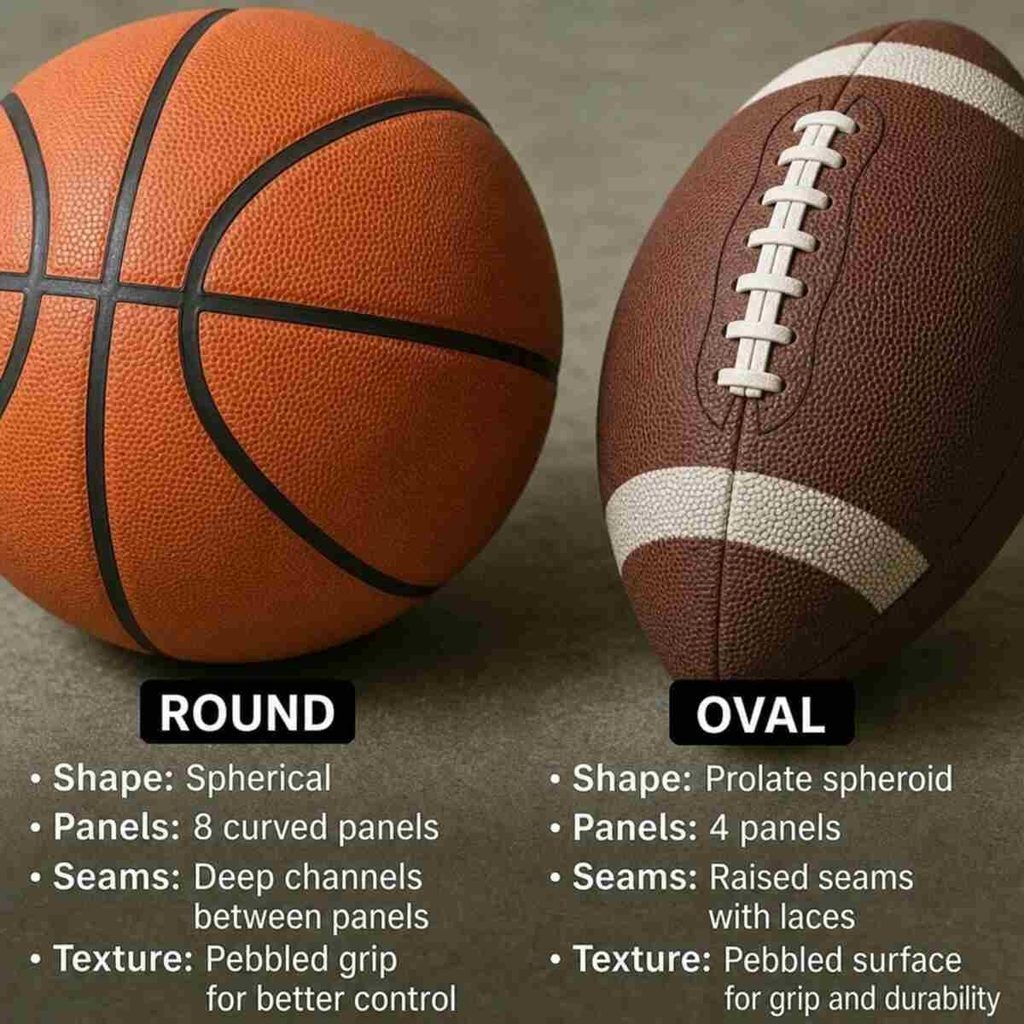
Elongated balls reward different skills from round balls. They can be carried securely against the body, kicked from hand or ground, and passed in ways that use spin for stability. World Rugby states that the rugby union ball is oval, made of four panels, weighs 410 to 460 grams, and may be treated to make it water resistant and easier to grip.
American football developed its own specifications. The NFL rulebook defines the ball as a prolate spheroid with specified axis, circumference, weight, leather case, bladder pressure, and referee supervision. The shape is not incidental; it enables spiral passing, end-over-end kicking, unpredictable bouncing, and specialized handling.
Rules, surfaces, and skill levels shape the right ball
A ball that is excellent in one setting can be wrong in another. This is where many buyers make mistakes. They select by brand, color, or price alone, when the better sequence is sport, age, rule set, surface, use case, and durability requirement.
For organized play, begin with the rulebook. A youth league, school association, club competition, or tournament may require an approval mark, size category, color, or ball model range. IFAB requires approved quality marks for balls used in official FIFA or confederation competitions, while the ITF maintains an approved list for tennis balls used in tournament play.
For training, begin with the player. Children often need smaller or softer balls because full-size adult equipment can distort technique. A ball that is too large may force awkward contact; one that is too heavy may reduce confidence or increase strain; one that is too lively may make practice chaotic. The purpose of a training ball is not always to imitate elite competition. Sometimes the better ball slows the game, increases touches, and helps the player repeat a skill accurately.
For surfaces, begin with abrasion and rebound. Outdoor basketballs need tougher covers than indoor basketballs. Soccer balls used on artificial turf may need stronger outer materials and seams than balls used only on grass. Tennis balls may behave differently on clay, grass, or hard courts. A rugby ball used in wet conditions needs reliable grip and water resistance.
A practical selection checklist
Use this sequence before buying or assigning sports balls for play:
- Identify the rule environment. Is the ball for casual play, school practice, league competition, tournament play, or professional-style training?
- Confirm the required size. Check age group and governing rules before assuming adult size is correct.
- Match the surface. Indoor hardwood, grass, artificial turf, clay, asphalt, concrete, and wet fields place different demands on the cover.
- Choose the performance level. A high-end match ball may feel excellent but may not be the most economical choice for repeated drills.
- Check pressure and maintenance needs. Inflated balls require inspection, pumps, gauges, and storage habits.
- Inspect construction. Look at seams, panels, texture, valve quality, cover durability, and shape retention.
- Test feel in context. Bounce the basketball on the actual court, kick the soccer ball on the training surface, or serve the tennis ball under normal conditions.
- Plan replacement. Worn balls can teach poor habits because rebound, grip, and flight change gradually before the equipment looks unusable.
This checklist is deliberately practical. It moves the decision away from vague labels and toward the conditions that actually determine whether game balls help or hinder play.
The hidden language of size, weight, pressure, and bounce
Every sport teaches the body a relationship to the ball. Size determines how much surface is available for contact. Weight determines effort, speed, and safety. Pressure determines responsiveness. Bounce determines timing. Texture determines grip, spin, and tactile feedback.
Consider pressure first. An underinflated soccer ball may absorb too much energy and feel dead off the foot. An overinflated basketball may rebound too sharply and reduce touch around the rim. A football outside its pressure range may alter grip and passing feel. Pressure is therefore not a minor maintenance detail; it is a performance condition.
Weight operates differently. A heavier ball can build strength in some training contexts, but if used casually without purpose, it may damage technique. Young players who practice with balls beyond their size or strength level may compensate with poor movement patterns. The goal is not to make practice difficult for its own sake. The goal is to create a challenge that still preserves the correct motion.
Bounce is equally instructional. A low-compression tennis ball gives a developing player more time between bounce and strike, which can encourage better preparation. A basketball with consistent rebound helps a player learn dribbling rhythm. A soccer ball that rebounds predictably from the ground supports first-touch training. In each case, the ball teaches timing.
Texture closes the loop between equipment and the body. Pebbled basketball covers, stitched baseball seams, tennis felt, rugby grip textures, and soccer panel surfaces all serve human contact. The hand or foot reads these textures, often faster than conscious thought. Good equipment makes that reading easier.
Manufacturing changed the economics of play
The history of sports balls is also an economic history. When balls are handmade from scarce materials, they are expensive, variable, and difficult to replace. When manufacturing becomes standardized, more people can participate, and more specialized products can exist.
Synthetic materials widened access by reducing dependence on high-grade leather and by making durable recreational balls possible. A school can keep bins of practice balls. A community program can buy outdoor basketballs that survive rough surfaces. A soccer club can reserve premium match balls for competition and use training balls for daily drills. These distinctions reflect cost management as much as performance science.
At the same time, more product categories can confuse buyers. “Professional,” “club,” “training,” “match,” “replica,” “turf,” “indoor,” “outdoor,” and “all-surface” do not always mean the same thing from one sport or manufacturer to another. The safest reading strategy is to treat marketing labels as introductions, not conclusions. Then verify size, material, intended surface, approval mark, and use case.
A useful analogy comes from writing, where a polished essay and a workshop draft are both legitimate forms but serve different purposes. In the same way, a premium match ball and a rugged training ball are not simply “good” and “bad.” They are built for different tasks. The right question is not always “Which is best?” but “Best for what?”
How ball design changes the style of play
Small changes in ball design can influence tactics, technique, and spectacle. A faster tennis ball or quicker court combination shortens reaction time. A basketball with a cover that grips well supports advanced ball handling. A soccer ball that stays lighter in rain allows cleaner passing late in a match. A baseball with seam behavior that affects spin can influence pitching strategy.
This is why governing bodies tend to regulate balls carefully. A sport is a shared agreement about difficulty. If the ball becomes too lively, too slow, too slippery, too large, too small, or too inconsistent, the balance between offense and defense may shift. The public may notice only the highlight, but players notice the equipment pathway that made the highlight possible.
The same principle applies at recreational levels. A child learning to shoot basketball with an adult ball may struggle not because of poor effort but because the equipment asks for strength and hand size the child has not yet developed. A casual soccer group playing on pavement with a slick grass ball may experience erratic control because the surface and cover do not cooperate. The design affects the lesson.
Examples of design shaping behavior
- Panel construction in soccer can affect water resistance, roundness, and flight stability.
- Cover texture in basketball affects grip, especially during quick changes of direction.
- Seams in baseball help pitchers create movement and help fielders control throws.
- Felt in tennis interacts with air and court surface, affecting pace and bounce.
- Oval shape in rugby and football creates specialized passing, kicking, and carrying techniques.
- Compression in training balls can slow play and improve learning conditions for beginners.
When readers understand these connections, ball selection becomes less mysterious. The ball is not a neutral object placed into the game. It is one of the game’s authors.
Digital ball games extend the same principles
Online and digital ball games may not require leather, rubber, felt, or pressure, but they often simulate the same principles that govern physical sports balls. A digital ball still has apparent weight, velocity, rebound, spin, collision behavior, surface interaction, and timing. If those properties feel wrong, players sense it immediately, even if they cannot name the physics.
This is one reason digital ball games are so intuitive. A player who understands how a real basketball arcs, how a soccer ball rolls, or how a tennis ball rebounds brings expectations into the screen environment. Game designers then decide whether to imitate reality, simplify it, or exaggerate it for speed and satisfaction.
The connection also works in reverse. Digital games can teach players to observe trajectories, angles, timing, and cause-and-effect relationships. They cannot replace embodied practice, but they can make ball dynamics more visible. When a player sees how angle changes rebound or how force changes distance, the same conceptual awareness can enrich real-world play.
For a general audience, this is a helpful bridge. The evolution of game balls is not only about objects in gym bags and equipment rooms. It is also about the way cultures encode motion, fairness, difficulty, and reward, whether the ball is physical or simulated.
Common mistakes when choosing play balls
Selecting play balls sounds easy until the first poor choice reveals itself in practice. Many mistakes come from ignoring context.
One common mistake is using a competition ball for every drill. Premium balls may provide excellent touch, but they can wear unnecessarily during repetitive training, especially on rough surfaces. A durable training ball may be the better everyday choice, with match balls reserved for scrimmages or official games.
Another mistake is buying by age without checking size guidance. Age categories vary by sport and organization, and some programs modify equipment to support development. The safer method is to consult the league, coach, school, or governing body before buying in quantity.
A third mistake is overlooking storage. Inflated balls should not be left indefinitely in extreme heat, cold, dampness, or direct sun. Tennis balls lose liveliness after use and pressure changes. Leather and composite covers can dry, scuff, or absorb moisture. Even robust sports balls benefit from ordinary care.
A fourth mistake is confusing appearance with approval. A ball may look like an elite model but lack the approval mark or construction quality required for a particular competition. Conversely, a modest-looking ball may be entirely appropriate for training. Read the specifications before trusting the visual design.
Maintenance as part of performance
Ball maintenance is not glamorous, but it is one of the simplest ways to improve consistency. A well-maintained ball gives better feedback. A poorly maintained ball teaches the body to adapt to defects.
Inflated balls should be checked with a pressure gauge when accuracy matters. Hand pressure alone is too imprecise for competition or serious training. Valves should be moistened before inflation if the manufacturer recommends it, and needles should be inserted carefully to avoid valve damage. Balls should be inflated gradually rather than forced quickly.
Cleaning depends on material. A rubber outdoor basketball can usually tolerate more rugged wiping than a premium indoor leather ball. Soccer balls used in mud should be cleaned and dried before storage. Tennis balls should be kept dry when possible because moisture changes weight and felt behavior. Baseballs used for formal play should be replaced when scuffed, cut, softened, or altered beyond the accepted condition.
A simple maintenance routine can extend usefulness:
- Store balls in a cool, dry place.
- Keep inflated balls near their recommended pressure.
- Separate indoor-only balls from outdoor balls.
- Rotate training balls so wear is distributed.
- Remove damaged balls from drills that require accurate feedback.
- Use bags, racks, or bins that prevent crushing and moisture buildup.
The underlying principle is educational. If practice is repetition, then the object being repeated against should be dependable.
Cultural meaning and design memory
Sports balls carry cultural memory. The white baseball with red stitching, the orange basketball, the paneled soccer ball, the yellow tennis ball, and the laced American football are visual shorthand for entire games. These designs persist partly because they function, but also because people recognize them.
Changes therefore meet resistance. Players often develop trust in a particular feel. Fans notice when a ball looks different during a major event. Coaches may prefer equipment that matches the rhythm of older teaching methods. Manufacturers must balance innovation with continuity.
This tension is productive. If design never changed, sports would ignore better materials and safer options. If design changed too quickly, games might lose comparability across seasons and generations. The best evolution respects both performance and memory.
Key takeaways for understanding game balls
The long evolution of game balls can be reduced to several durable ideas:
- Materials shape possibility. Rubber, leather, fiber, cork, felt, foam, and synthetics each make certain kinds of play easier.
- Rules shape fairness. Size, weight, pressure, and approval marks keep competition within a shared framework.
- Surfaces shape selection. The right ball for hardwood may be wrong for asphalt, and the right ball for grass may be wrong for turf.
- Skill level shapes learning. Younger or newer players often benefit from smaller, softer, slower, or more durable equipment.
- Maintenance shapes feedback. A ball that loses pressure, grip, shape, or bounce can quietly undermine practice.
- Design shapes culture. Sports balls are practical tools, but they are also symbols of the games people inherit and teach.
These points apply whether you are choosing equipment for a school, coaching a youth team, organizing casual recreation, comparing standards across sports, or simply trying to understand why a familiar object has become so technically refined.
Conclusion
The evolution of sports balls is the evolution of play made visible. From natural rubber and stitched leather to synthetic composites and formal testing programs, the ball has followed the needs of the game: consistency, safety, durability, fairness, and expressive skill.
The best practical habit is to choose the ball by purpose. Ask what sport, rule set, surface, age group, and training goal the ball must serve. When those questions come first, game balls stop being interchangeable objects and become precise instruments for better play.
