


The e-commerce landscape is constantly evolving, but one reality remains: the dropshipping business model is still one of the most accessible and profitable ways to launch an online brand. If you are looking to start or scale an e-commerce store in 2023, you are likely looking toward the East. The sheer volume of manufacturing, technological advancement, and logistical infrastructure makes dropshipping from China a highly lucrative endeavor when executed correctly. Have the Best information about dropshipping from china.
However, the tactics that worked in 2018 won’t necessarily yield the same results today. Modern consumers demand faster shipping, higher quality, and genuine brand experiences. Building a sustainable business means knowing exactly what products to sell, how to navigate complex international logistics, and how to build long-term relationships with your manufacturing partners.
In this comprehensive guide, we will explore the top products to sell this year, delve into advanced sourcing strategies, and provide actionable tips for mastering the operational side of your business.
Why Dropshipping from China Remains a Powerhouse in 2023
Before we dive into specific products, it is vital to understand why China remains the dominant player in the global dropshipping space.
While importing from China traditionally required massive capital for bulk inventory, warehousing, and complex freight forwarding, dropshipping removes these barriers to entry. Chinese suppliers have tailored their operations specifically to accommodate dropshippers. They offer single-item fulfillment, automated order processing, and a vast ecosystem of integrated apps designed to sync directly with platforms like Shopify, WooCommerce, and BigCommerce.
Furthermore, Chinese manufacturing has shifted. It is no longer just about mass-producing cheap, disposable goods. Today, Chinese factories are leading innovators in smart home technology, eco-friendly materials, and advanced consumer electronics. By tapping into this market, you are giving your brand access to cutting-edge products before they become saturated in Western retail stores.
Top Selling Niches for Global Trade in 2023
Choosing the right product is the foundational step of your e-commerce journey. To succeed in 2023, you need products that solve a problem, cater to a passionate audience, or offer a unique “wow” factor. Here are the top selling niches for global trade and the specific products you should consider adding to your store.
1. The Smart Home Revolution
Consumers are increasingly looking to automate their living spaces. Smart home gadgets are highly marketable, offer great profit margins, and appeal to a broad demographic of tech enthusiasts and everyday homeowners alike.
- Smart LED Lighting: Moving beyond basic lightbulbs, consumers want smart LED light strips that sync with their televisions, gaming setups, or music. These are lightweight, cheap to source, and highly visual for TikTok and Instagram marketing.
- Wi-Fi Smart Plugs: A low-cost entry item that turns any standard appliance into a smart device. They are perfect for upselling and bundling.
- Robotic Vacuum Accessories: While selling a heavy, expensive robotic vacuum might be risky for a beginner, selling replacement brushes, filters, and magnetic boundary strips is a highly profitable, recurring sub-niche.
2. Pet Health and Wellness
The pet industry is virtually recession-proof. Pet owners are notoriously passionate and willing to spend premium prices for products that improve the lives of their furry friends.
- Calming Pet Beds: These plush, donut-shaped beds have been consistent sellers. They solve a specific problem (pet anxiety) and offer an easy emotional marketing angle.
- Interactive Smart Toys: Products like laser pointers controlled via smartphone or self-rolling balls keep pets entertained while owners are at work.
- Orthopedic Dog Ramps: As the pet population ages, owners are looking for ways to help their small or senior dogs access furniture safely. Ramps and pet stairs are high-ticket items with excellent margins.
3. Ergonomic Home Office Equipment
With remote and hybrid work becoming permanent fixtures of the global economy, the demand for home office upgrades has skyrocketed.
- Adjustable Laptop Stands: Essential for posture, these lightweight aluminium stands are incredibly easy to ship and have a high perceived value.
- Ergonomic Seat Cushions: Memory foam cushions targeting back pain relief appeal to office workers, gamers, and long-distance drivers.
- Blue Light Blocking Glasses: A staple in the remote-work niche, these glasses are cheap to source, easy to brand, and incredibly lightweight for international shipping.
4. Eco-Friendly and Sustainable Goods
Consumers are voting with their wallets, prioritizing brands that offer sustainable alternatives to single-use plastics.
- Reusable Silicone Food Storage Bags: An excellent alternative to plastic zip-top bags. They are durable, microwave-safe, and visually appealing in marketing videos.
- Bamboo Toothbrushes and Travel Cases: A classic eco-friendly product that works wonderfully for subscription box models.
- Beeswax Food Wraps: These colorful, natural alternatives to cling film have a strong appeal in the home and kitchen niches.
5. Health, Beauty, and Personal Care
The personal care niche thrives on products that offer professional-level results from the comfort of home.
- Posture Correctors: A perennial top-seller. With more people hunched over desks and smartphones, posture correctors solve an immediate, painful problem.
- Facial Massage Globes (Ice Globes): Skincare enthusiasts love these glass globes used for reducing facial puffiness. They are visually stunning for social media marketing.
- IPL Hair Removal Handsets: A high-ticket item that replaces expensive salon treatments. While the sourcing cost is higher, the profit margins and marketing angles are incredibly lucrative.
Sourcing Your Products: Navigating the Platforms
Once you have identified your winning products, the next step is to find the right platform to source them from. While AliExpress is the most famous starting point, it is not the only—or necessarily the best—option in 2023.
AliExpress Alternatives for Beginners
If you are just starting, you might find the vastness of AliExpress overwhelming. Fortunately, there are several AliExpress alternatives for beginners that offer more curated experiences, faster shipping options, and better customer support.
- Spocket: Known for bridging the gap between dropshippers and suppliers in both the US/EU and Asia. It offers a highly vetted list of suppliers.
- Banggood: Similar to AliExpress but often features a better selection of electronics and gadgets. They have a dedicated dropshipping program with tiered discounts.
- Zendrop: Created by dropshippers, for dropshippers. Zendrop offers faster shipping times, custom branding, and a much more reliable supplier vetting process than standard open marketplaces.
The Great Debate: CJ Dropshipping vs AliExpress
As you scale, you will inevitably encounter the debate of CJ Dropshipping vs AliExpress. Understanding the difference is crucial for your operational efficiency.
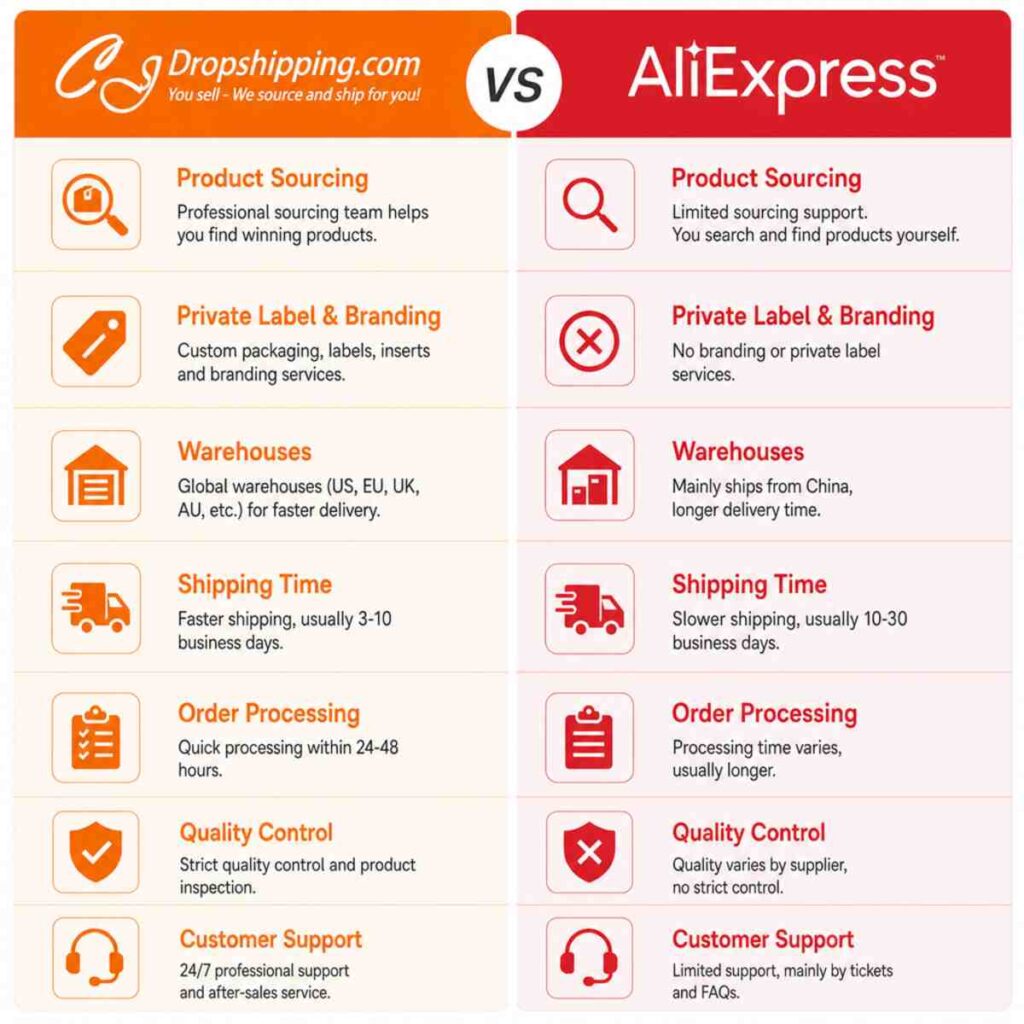
AliExpress is essentially the Amazon of China—a massive retail marketplace made up of thousands of individual sellers. It is fantastic for product research and for quickly testing new ideas. However, because you are dealing with middlemen rather than direct manufacturers, communication can be spotty, and shipping times are often unpredictable.
CJ Dropshipping, on the other hand, is a platform built specifically for the dropshipping business model. Instead of buying from a middleman, CJ Dropshipping sources the product directly from the factory, stores it in its warehouses (it has warehouses worldwide), and ships it to your customer.
- Pros of CJ: Consolidates multiple items into one package, offers custom packaging, provides professional product videos, and generally offers faster, more reliable shipping lines.
- Pros of AliExpress: Unbeatable product variety and excellent for testing single products with zero upfront commitment.
For a brand looking to establish reliability in 2023, migrating from AliExpress to a dedicated fulfillment partner like CJ Dropshipping or a private agent is highly recommended.
Finding and Vetting Manufacturing Partners
Relying purely on automated platforms will only get you so far. To build a robust, scalable brand, you eventually need to move away from public marketplaces and start building direct relationships with factories and agents.
Finding Reliable Sourcing Agents
A sourcing agent acts as your boots on the ground in China. They negotiate prices with factories, consolidate your orders, perform quality checks, and manage international shipping. Finding reliable sourcing agents is a game-changer for your business.
You can find excellent agents through Facebook dropshipping groups, Upwork, or by reaching out to specialized agencies. When interviewing an agent, ask them about their daily order minimums, their preferred shipping lines, and how they handle broken or lost items. A good agent will not only source the product at a lower price than AliExpress but also proactively suggest packaging upgrades.
Verifying Chinese Business Licenses
Unfortunately, the e-commerce space is not without its scammers. When you transition to paying agents or factories directly (often via wire transfer or Payoneer), due diligence is required. Verifying Chinese business licenses is a critical step in protecting your capital.
Every legitimate business in China is registered with the government and possesses a 18-digit Unified Social Credit Code. You can request a copy of their business license (Business License for Enterprise Legal Person) and verify it through the Chinese government’s National Enterprise Credit Information Publicity System (NECIPS). While the site is in Chinese, you can easily navigate it using Google Translate. Ensure that the company’s registered capital aligns with the size of the factory they claim to be, and verify that their “business scope” actually includes manufacturing or trading the goods you are buying.
Communicating with Suppliers on WeChat
Email is not the preferred method of business communication in China; WeChat is. Communicating with suppliers on WeChat enables real-time problem-solving, sharing of factory videos, and rapid negotiation.
To succeed on WeChat:
- Be clear and concise: Use simple English. Avoid slang or complex idioms that might be lost in translation.
- Use visual aids: Circle issues in photographs, send bulleted lists, and use voice notes if the supplier speaks English.
- Understand time zones: Be prepared to work late at night or early in the morning to catch your suppliers during standard Beijing time (CST) working hours.
- Build “Guanxi”: In Chinese business culture, Guanxi refers to the network of relationships and mutual trust. Taking the time to wish your supplier a good weekend or to ask about their well-being goes a long way toward securing better pricing and priority processing.
Ensuring Product Quality and Customer Satisfaction
The fastest way to destroy an e-commerce brand is by shipping inferior products. When you never physically touch the items you sell, quality assurance becomes a logistical challenge.
Quality Control for Overseas Products
Implementing strict quality control for overseas products is non-negotiable. Here is a step-by-step framework to ensure you are selling top-tier goods:
- Order Samples First: Never scale ads for a product you haven’t held in your own hands. Assess the shipping time, packaging quality, and the item’s durability.
- Request Unboxing Videos: Ask your supplier or sourcing agent to send a video of them unboxing and operating the item before a bulk shipment goes out.
- Hire Third-Party Inspectors: If you move from dropshipping to bulk-buying inventory for a 3PL (Third-Party Logistics) warehouse, hire a company such as V-Trust or QIMA. For a few hundred dollars, they will visit the factory, inspect a randomized batch of your products, and send you a detailed photographic report before you release final payment.
Handling Returns from International Customers
Returns are an inevitable part of retail. Handling returns from international customers elegantly can turn an angry buyer into a loyal, returning customer.
Shipping a $20 item back to China is usually not cost-effective due to high return postage rates. Instead, consider these strategies:
- The “Keep It” Refund: If the product is broken, ask the customer for a photo for your records (so you can get a refund from your supplier) and simply issue a replacement or a full refund, telling them to keep or donate the defective item.
- Local Return Centers: Use services like Returnly or specialized local 3PLs that accept returns in your target country (e.g., a return address in the US). Once a batch of returns accumulates, the 3PL can inspect them, restock the usable ones, and discard the broken ones.
Mastering Logistics: Shipping and Delivery Strategies
The biggest objection consumers have to buying from a dropshipping store is the wait time. Mastering your logistics is what will separate you from amateur sellers.
The Evolution of Shipping: ePacket Delivery Pros and Cons
For years, ePacket was the gold standard for dropshippers. It was a treaty agreement that allowed lightweight packages from China to be delivered globally by local postal services (like USPS) at incredibly cheap rates.
Understanding the pros and cons of ePacket delivery today is vital.
- The Pros: It is still incredibly cheap, offers basic end-to-end tracking, and is widely available across almost all AliExpress suppliers.
- The Cons: Post-2020, ePacket has become notoriously slow. Delivery times can stretch from 20 to 45 days. In 2023, modern consumers simply will not wait a month for a standard e-commerce order.
Reducing International Shipping Times
Because ePacket is no longer sufficient for a premium brand experience, you must focus on reducing international shipping times using private courier lines.
Work with your sourcing agent or fulfillment platform to utilize premium shipping lines like YunExpress, 4PX, or CNE Express. These companies fly the packages on private cargo planes directly to the destination country, clear customs in bulk, and hand them off to the local postal service for the “last mile” delivery. By utilizing these lines, you can consistently achieve 7-to-12-day shipping times from China to the US, UK, and Europe.
Minimizing Package Delivery Delays
Even with premium shipping lines, delays happen. Minimizing package delivery delays requires proactive management.
- Accurate Customs Declarations: Ensure your supplier accurately describes the product and its value. Vague descriptions like “Gift” or “Accessory” are red flags for customs agents and can cause weeks of delays.
- Clear Address Formatting: Use an address validation API on your checkout page to prevent customers from entering typos that cause failed deliveries.
- Automated Tracking Updates: Use apps like AfterShip or Track123 to send your customers automated email or SMS updates every time their package moves. If the customer knows exactly where their item is, they are far less likely to issue a chargeback or complain about delays.
The Impact of Chinese New Year on Supply Chains
If you are dropshipping from China, there is one annual event you must plan for: the Spring Festival. The impact of Chinese New Year on supply chains cannot be overstated.
Usually occurring in late January or early February, Chinese New Year (CNY) results in the near-total shutdown of manufacturing and logistics in China for two to three weeks. Factories close, workers travel back to their home provinces, and ports operate at a fraction of their capacity.
To survive CNY:
- Communicate with your agent in December to find out their exact cutoff dates for taking new orders.
- Scale back your advertising spend during the holiday to avoid taking orders you cannot fulfill.
- If you have a proven winning product, pre-purchase bulk inventory in December and store it in a local US or European warehouse to keep your business running seamlessly while China is on holiday.
Scaling Up: Building a Real Brand
Dropshipping is a phenomenal fulfillment method, but it is not a brand in itself. To build a highly profitable, sellable asset, you must transition from being a middleman selling generic goods to a recognized e-commerce brand.
Private Labeling Dropshipped Goods
One of the most effective ways to build brand equity is by private labeling dropshipped goods. This means placing your own logo, custom packaging, and branded inserts onto the products you sell.
You don’t necessarily need to order 10,000 units to start private labeling. Many modern sourcing agents and platforms, such as CJ Dropshipping, offer low Minimum Order Quantities (MOQs) for custom packaging. You can pre-purchase 500 custom-printed cardboard boxes or branded thank-you cards for a very low cost. Your agent will keep these materials in their warehouse and pack your dropshipped items into your custom boxes as the daily orders roll in. This elevates the perceived value of your product, allowing you to charge higher premium prices and encouraging user-generated content (UGC) from happy customers unboxing your aesthetically pleasing packages.
Leveraging Automated Fulfillment Software
As your daily order volume grows from 10 to 100, manual data entry becomes impossible. Implementing automated fulfillment software is essential to maintain your sanity and keep your business running smoothly.
Applications like DSers, AutoDS, or Zendrop integrate directly with your Shopify store. When a customer places an order, the software automatically pushes the order details, shipping address, and product variants directly to your supplier. Once the supplier ships the item, the software automatically retrieves the tracking number, updates the order status in your store, and sends a shipping confirmation email to your customer. By automating this process, you free up hours of your day—time that can be spent on high-leverage activities like marketing, content creation, and customer service.
Legal and Financial Considerations
As your international e-commerce business grows, so do your legal and financial responsibilities. Ignoring these elements can lead to seized packages, massive fines, or a suspended payment gateway.
Understanding Import Taxes and Customs Duties
When you ship products internationally, you are acting as the importer of record (or your customer is, depending on the setup). Navigating import taxes and customs duties is a vital part of your pricing strategy.
- The United States: The US has highly favorable import laws for dropshippers. Under the De Minimis threshold, most individual shipments valued under $800 can enter the United States duty-free. This is why dropshipping to the US remains incredibly profitable.
- The European Union: The rules in Europe recently changed drastically. The EU abolished the €22 VAT exemption. Now, all goods imported into the EU are subject to Value Added Tax (VAT). To manage this, dropshippers must register for the Import One-Stop Shop (IOSS) scheme. By registering for IOSS, you collect the VAT at the point of sale on your website and remit it to the EU tax authorities monthly. This ensures your packages breeze through customs without your customers being hit with surprise tax bills at their doorsteps.
- United Kingdom: Similar to the EU, the UK requires VAT to be collected at the point of sale for consignments under £135. You will need to register for a UK VAT number and remit taxes quarterly to HMRC.
Make sure your store’s shipping policy clearly outlines who is responsible for customs duties. Transparency builds trust and prevents chargebacks from angry customers who didn’t expect to pay an import fee.
The Path Forward in 2023
Succeeding in the modern e-commerce landscape requires more than just throwing up a quick website and running cheap ads to generic products. The dropshipping business model has matured. Consumers are smarter, the competition is fiercer, and the logistical challenges are more complex.
However, by focusing on high-quality, problem-solving niches, stepping away from overcrowded platforms in favor of robust AliExpress alternatives for beginners, and partnering with dedicated sourcing agents, you can build an incredibly resilient business.
Remember that dropshipping from China is ultimately just a method of supply chain management. Your real job is marketing, brand building, and customer experience. Treat your suppliers with respect, invest in quality control for overseas products, master your shipping logistics, and always be transparent with your customers. If you apply these principles, 2023 can undoubtedly be the year you build a thriving, globally recognized e-commerce brand.
