

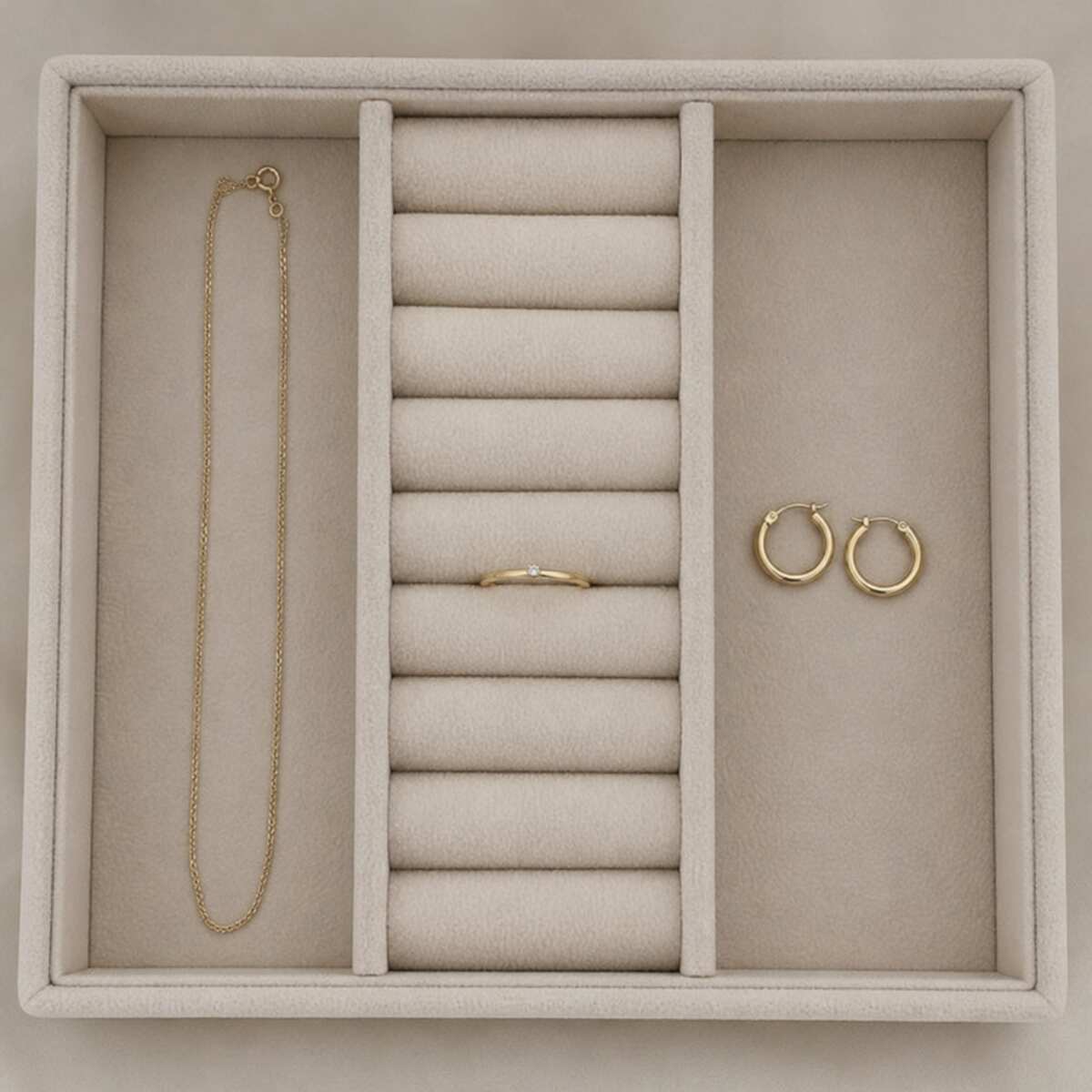

Caring for minimalist 18K gold pieces for daily wear—including under-1g minimalist designs—means protecting their shape as well as their shine. Gentle cleaning, separate storage, and removing jewelry before rough activities are the main habits to build. Lightweight pieces need particular attention because thin walls, fine links, and tiny connections can be vulnerable to pressure, even when the jewelry is genuine gold. The Amazing fact about moonamo.
You don’t need an elaborate care kit. You need to understand what you own, notice changes early, and make a few sensible decisions before putting it on.
Can minimalist 18K gold jewelry handle daily wear?
Minimalist 18K gold jewelry can suit daily wear, but suitability depends on its construction and the activities you wear it for. An 18K label describes gold purity, not a promise that a ring, chain, or clasp will resist every bend or pull. Gold jewelry can scratch, dent, or break, so a delicate design needs habits that match its structure.
The useful distinction is between wearing something often and wearing it through everything. A fine necklace can be part of your everyday outfit without joining you for weightlifting, housecleaning, swimming, and sleep.
Think about your actual day rather than an ideal version of it. Do you carry heavy grocery bags? Work with your hands? Pull sweaters over your head several times a day? Use those answers to decide when your jewelry belongs in its case.
Weight is only one part of durability
A weight below one gram doesn’t provide enough information to judge a piece’s strength. Lightweight construction may involve thin walls or delicate components, which deserve protection from flattening, stretching, and other pressure-related damage. That makes construction a more useful starting point than weight alone.
When considering under-1g 18K minimalist gold durability, ask the seller to explain the specific design:
- Where is the metal thinnest? Ask about the ring shank, chain links, pendant loop, and clasp connections.
- Is any part hollow? Request a clear answer rather than relying on how substantial the item looks in a photo.
- What activities should you avoid? Look for guidance for that piece, not a general statement about gold.
- Can it be repaired? Ask what happens if a link breaks, a hoop dents, or a clasp stops closing properly.
Don’t test strength by tugging a chain or squeezing a ring. Instead, ask for a demonstration of its clasp and normal handling. Your goal is to learn how the piece works without making the inspection itself a stress test.
Understand the material and construction first
Before choosing a cleaning method, establish what the jewelry contains. Gold purity, surface finishes, gemstones, and hollow components are separate details. Keep the seller’s description and care instructions together so you don’t have to reconstruct those details later.
What the 18K marking tells you
18K gold contains 75% gold, with the remaining portion made up of other metals. Those added metals affect properties such as color and strength. The marks “18K” and “750” are commonly used to indicate this gold content.
That answers a purity question, not every care question. Two pieces with the same karat marking can have different shapes, finishes, and components. Record those details separately rather than treating “18K” as a complete set of instructions.
A useful note in your phone might read: “18K yellow gold necklace; fine chain; no stones; original pendant only; maker recommends hand cleaning.” Add the actual instructions supplied with your piece. Keep a photo of the receipt nearby.
Gold plating and hollow construction need clarification
Gold-plated jewelry has a gold surface over another material, and that plating eventually wears away. Hollow construction is a different issue: it concerns the item’s structure rather than simply its surface. The FTC distinguishes these descriptions, so ask the seller to clarify both the metal content and whether the piece is hollow.
Avoid guessing from appearance. A large-looking hoop isn’t necessarily substantial throughout, and a tiny charm isn’t necessarily plated. If a listing uses several terms without explaining them, request a plain-language description before deciding how to care for it.
White gold and decorative finishes
White gold may have a thin rhodium coating that contributes to its appearance. Ask whether your piece has that coating and what maintenance the maker recommends. Don’t assume every color change calls for stronger cleaning.
For brushed, satin, textured, or engraved surfaces, keep the original finish in mind when requesting service. Tell the jeweler what you want preserved. A clear instruction such as “clean it, but don’t change the matte finish” is more useful than simply asking them to make everything shiny.
Build a daily routine around removal and safe handling
Make care part of getting dressed rather than a separate project. Choose a place to put jewelry on, a place to store it, and a simple order for handling it. The routine should be easy enough to follow when you’re tired or running late.
Put jewelry on after personal-care products
Apply lotion, sunscreen, fragrance, and hair products before putting on your jewelry. These products can leave a film that makes pieces look dull, while some ingredients can harm sensitive gemstones. Removing jewelry before showering also avoids unnecessary product buildup.
Try this order:
- Finish showering and applying personal-care products.
- Get dressed, especially if your top has a tight neckline.
- Put on your jewelry with your hands free of excess product.
- Check that each clasp or backing is properly positioned.
- Make one final visual check before leaving.
Give yourself a stable surface for fastening small pieces. If you tend to drop earring backs, sit at a clear table instead of leaning over a bathroom sink. Put a clean cloth beneath your hands while you work.
Remove pieces before forceful or messy tasks
Take off fine jewelry before household cleaning, gardening, swimming, contact sports, and gym activities that expose it to equipment or pressure. Industry care guidance specifically cautions against chlorine, harsh cleaners, and physical tasks that can damage jewelry.
Plan the removal before starting. For example, put rings away before carrying a laundry basket downstairs or beginning yardwork. Don’t wait until your hands are wet, dirty, or already occupied.
Use one reliable temporary storage spot
Choose a small, divided container for moments when jewelry comes off during the day. Keep it away from sink edges, open drains, and places where someone might mistake it for clutter. If you live with other people, make sure they know what the container is for.
Avoid switching between pockets, napkins, countertops, and cup holders. Pick a system you can repeat. The point isn’t to create a perfect display; it’s to know exactly where each piece goes.
Adjust care to the type of jewelry
A ring, necklace, bracelet, and pair of earrings don’t encounter the same situations. Review each piece in the context of how you wear it. If something repeatedly gets in the way, change the wearing arrangement rather than simply becoming more careful every time.
Thin rings and stacking bands
Gold can dent or bend under direct pressure, and even solid gold jewelry needs protection from hard impacts. For slender rings, removing them before lifting, gripping equipment, or doing physical work is a sensible precaution.
Start with one ring and notice how it fits into your routine. Then add other bands if you enjoy stacking. Pay attention to any combination that feels awkward, catches during dressing, or makes removal difficult.
Don’t squeeze a misshapen ring back into place. Put it aside and describe what happened when you take it to a jeweler. Include the activity you were doing, even if it seemed ordinary at the time.
Fine necklaces and pendants
Only add pendants or charms that the chain is designed to support. Catbird’s gold-jewelry guidance specifically warns against putting pendants on chains that can’t carry them. If you’re changing the original combination, ask a jeweler to assess it first.
When removing a pullover, unfasten the necklace first rather than trying to keep it tucked out of the way. Do the same before using a hairbrush near a fine chain. Make these steps part of dressing and grooming, not emergency responses after something catches.
If you like layered necklaces, try the combination at home before wearing it all day. Check it while sitting, reaching, and turning your head. If you keep needing to separate the chains, simplify the combination.
Lightweight bracelets
For a delicate bracelet, consider where your wrist rests and what passes over it. Watch yourself typing, carrying a tote, fastening a seat belt, and putting on a jacket. Use that short review to decide whether the bracelet works for the whole day or only part of it.
If it repeatedly catches on a watch, sleeve, or bag strap, change the arrangement. Wear it on the other wrist, choose a different sleeve, or leave it off for that task. You don’t need to keep wearing an inconvenient combination just because it looks good when your arm is still.
Small hoops, studs, and earring backs
Earring posts and backs are among the components a professional inspection can check for bending, breakage, or wear. If a backing no longer feels secure or a post looks different, set the pair aside for assessment.
Handle one earring at a time over a clear surface. Put its backing in a dish before moving to the other ear. For hinged hoops, follow the maker’s opening instructions rather than improvising a twisting motion.
How should you clean minimalist 18K gold pieces at home?
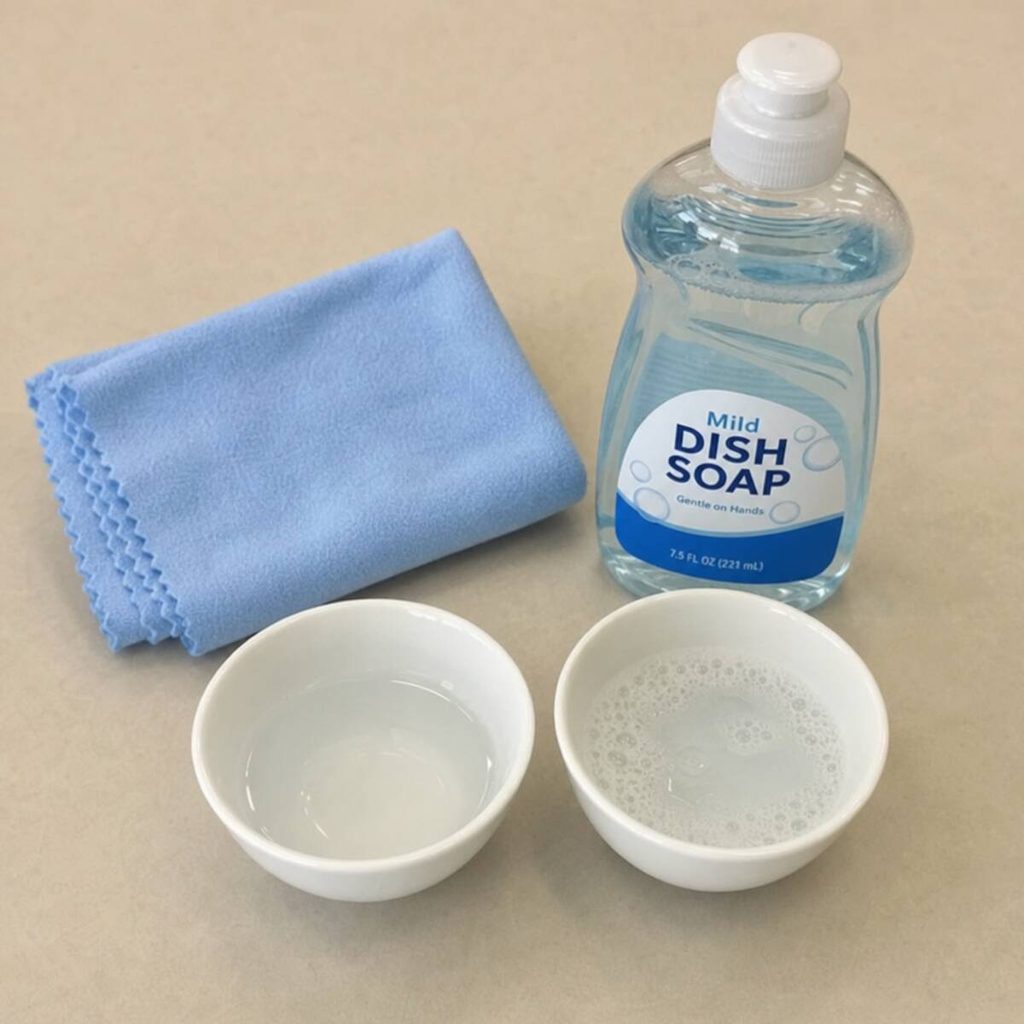
For an intact, plain 18K gold piece, gentle hand cleaning with lukewarm water, a little mild dish soap, and soft tools is a practical starting point. Check the maker’s instructions first, especially if the piece has gemstones, coatings, or other decorative materials. Gold-safe cleaning isn’t automatically safe for every part of a finished item.
Before beginning, decide whether the jewelry needs washing or simply a light wipe. Don’t turn a small amount of surface residue into an extended cleaning session. If you’re unsure what a mark is, stop and ask rather than increasing the pressure.
Prepare a small cleaning area
Set out a shallow bowl, a second container for rinsing, mild dish soap, and a clean, soft, lint-free cloth. A very soft brush can help with accessible crevices when the maker permits brushing. Use tools reserved for jewelry rather than a brush that still contains toothpaste or household cleaner. Abrasive products can scratch gold.
Work at a table with good light. Clear away dishes, food, and unrelated small objects. Keep the jewelry in view from the moment you remove it from storage until it returns there.
For a very small piece, place the cleaning bowl inside a larger tray. This gives you a defined workspace without adding anything complicated to the cleaning method. Keep pets and children away while tiny components are out.
Follow a gentle cleaning sequence
Use this sequence as a cautious hand-cleaning routine for a suitable, undamaged piece:
- Inspect before wetting. Look for an open connection, bent component, or visibly loose setting. Put questionable pieces aside for professional advice.
- Prepare lukewarm soapy water. Use a small amount of mild dish soap, not household disinfectant or an improvised chemical mixture.
- Clean one piece at a time. Keep control of the item instead of swirling several pieces together.
- Use light contact. Where brushing is appropriate, gently reach the dirty area without pulling a chain tight or pressing on a setting.
- Rinse in a separate bowl. GIA advises rinsing jewelry in a container rather than directly over a sink, where a loose stone or entire piece could be lost.
- Blot with a soft cloth. Handle the jewelry gently and allow it to dry before putting it away.
Take your time at the rinsing stage. Check the bowl before pouring anything away. If a component is missing when you finish, leave the workspace intact while you look for it.
Avoid pulling a cloth along a fine chain as though drying a length of string. Instead, arrange the piece on the cloth and blot around it. If the cloth catches, stop, release it carefully, and inspect the area before continuing.
Let the gemstones determine the limits
Pearls, opals, treated gems, and other sensitive materials may require care that differs from the surrounding gold. Heat, solvents, and some cleaning equipment can affect gemstones or their treatments. Identify every material before soaking or using a cleaning solution.
If the stone is unidentified, make identification your next step rather than choosing a stronger cleaner. Send the seller a clear photo and ask for the material name and care instructions. For inherited jewelry, a jeweler can help establish what you’re handling.
Keep the reply with the item’s records. “Small white stone” isn’t a useful cleaning specification, but an identified material and written care guidance give you something reliable to follow.
Clean according to condition, not an aggressive schedule
Jewelers of America recommends wiping jewelry after wear with a clean, soft, slightly damp cloth to remove lotions and surface residue. Professional cleaning can address buildup that needs more attention.
For your own routine, use a simple decision: wipe, wash if appropriate, or ask for help. If a light wipe restores the appearance, stop there. If the piece still looks unusual after suitable gentle cleaning, don’t keep repeating the process in the hope that more effort will solve it.
Avoid abrasive methods and unnecessary polishing
Cleaning and polishing aren’t the same task. Cleaning removes residue; polishing addresses the metal’s surface. Tiffany notes that polishing removes metal and recommends professional polishing rather than treating every scratch as a reason for another refinishing session.
For a minimalist piece, agree on the goal before requesting service. You may want it clean and structurally checked without asking for a new-looking finish. Put that request plainly on the service instructions.
Keep these methods out of a casual home-care routine:
- Toothpaste and abrasive household cleansers: GIA warns that abrasives can scratch gold and other metals.
- Bleach and chlorine-based cleaners: These can damage the metals used in gold alloys.
- Unapproved cleaning dips: Check compatibility with the complete piece, including stones and finishes.
- Automatic ultrasonic cleaning: Vibrations can loosen stones, and some gems or treatments aren’t suitable for the process. Ask a knowledgeable jeweler first.
Be cautious about online demonstrations that show a dramatic result without identifying the jewelry’s materials. A method that makes one object look brighter isn’t enough evidence to use it on yours. Follow instructions that apply to your actual piece.
Also distinguish an ordinary soft cloth from a cloth treated with polishing compounds. Read the label before use. If the product promises to remove scratches or tarnish, ask whether it suits your jewelry’s finish rather than assuming every jewelry cloth works the same way.
Store each piece separately and without pressure
Store jewelry in a lined case, individual pouch, or divided compartment instead of jumbling pieces together. Separate storage helps prevent scratching and tangling. Jewelers of America also recommends a dry, reasonably temperature-controlled storage location away from heating and cooling equipment.
Choose storage by how well it works when you’re in a hurry. A beautiful box isn’t helpful if you routinely drop everything into its largest section. Give the pieces you wear most their own easy-to-reach spaces.
Arrange necklaces before closing the case
Lay out each necklace so you can see its full length. Keep the pendant with its chain and avoid forcing a long piece into a tiny compartment. Before closing the lid, check that no section crosses the edge.
If you use a hanging organizer, make sure the arrangement doesn’t leave jewelry where clothing, hands, or doors regularly brush against it. If that location proves inconvenient, switch to a divided case. Your storage should suit the room you actually use.
For layered sets, store the necklaces individually even if you usually wear them together. You can place their compartments beside each other for convenience without leaving the pieces intertwined.
Give small components a fixed location
Keep earring pairs together with their backs. Put spare backs in a labeled compartment rather than mixing them with the pair you’re wearing. If you have several similar pieces, a quick photo can help you remember which components belong together.
Place rings where you can lift them easily without digging through a pile. Give lightweight hoops enough space that you don’t have to press them into place. Leave damaged jewelry in a separate, clearly marked container so it doesn’t accidentally return to use.
Try this check before closing your case: count the pieces you removed, confirm that their components are present, and look around the storage surface. It takes little effort and gives your routine a clear finish.
Make travel storage part of packing
Use a protective travel case with separate spaces for individual pieces. Tiffany recommends keeping jewelry organized, protected from clothing snags, and with you rather than in luggage that might be lost. A dedicated case is more useful than placing loose pieces among toiletries or clothes.
Pack for the activities on your itinerary. If the trip is mostly swimming, hiking, or other physical activity, consider leaving the most delicate pieces at home. Bring the items you expect to wear, not every option you might possibly want.
Before departure:
- Photograph the pieces you’re taking and note how many there are.
- Pack necklaces individually rather than as a layered set.
- Include the original care instructions if a piece has unusual materials.
- Leave space for jewelry you may remove during the trip.
- Decide where the case will stay when you’re not wearing anything.
At your destination, establish the storage spot before unpacking jewelry. Don’t leave a ring in a hotel bathroom while you decide where everything belongs. When packing to leave, check that same spot, your bedside area, and the empty compartments of the case.
Distinguish surface wear from structural warning signs
Fine scratches can develop on gold through wear, and they don’t automatically mean a piece needs immediate polishing. A change in shape, a damaged connection, or an insecure clasp is a different matter. Professional inspections specifically look for thinning metal, bent links, weak spots, and failing components.
Use appearance as a prompt to look more closely, not as a reason to guess at a repair. Compare the piece with an earlier photo if you have one. Describe what changed in plain terms: “this link looks longer,” “the clasp no longer closes fully,” or “the ring isn’t round anymore.”
Set aside pieces with these changes
Stop wearing the item and arrange an assessment if you notice:
- A clasp that stays partly open or no longer closes reliably.
- A gap in a connecting ring that wasn’t there before.
- A bent, stretched, broken, or sharply kinked chain section.
- A ring shank that appears cracked or noticeably thinner.
- An earring post or backing that has changed shape.
- A stone that appears tilted, loose, chipped, or differently positioned.
- A setting that has begun catching on clothing.
Don’t keep wearing the piece while checking whether the problem gets worse. Put it in a separate container and save any detached components. Write down what you noticed so you can explain it clearly at the repair counter.
Treat discoloration as something to identify
Gold jewelry can discolor, and exposure to household bleach or other cleaning products can be damaging. If the appearance changes after chemical contact, tell the jeweler exactly what product was involved. Don’t assume the answer is more scrubbing.
If the change appeared gradually, note where it occurs and whether gentle, approved cleaning changes it. Take a clear photo in neutral light. Those observations are more useful than experimenting with several cleaners and losing track of which one affected the surface.
When should a jeweler inspect or repair a delicate piece?
Have a jeweler assess a delicate piece whenever its shape, clasp, links, settings, or normal operation changes. Periodic professional inspections are also useful because they can identify wear and insecure components that aren’t obvious during daily handling. Ask for an inspection schedule suited to the item and how often you wear it.
Book the visit sooner if the piece has been caught, crushed, or pulled. Describe the event even when the jewelry still looks wearable. Let the professional decide what needs closer examination.
Separate cleaning, repair, and refinishing requests
At the counter, state your priorities in order. For example: “Please check the chain and clasp, tell me whether anything needs repair, and clean it only if the condition allows.” If preserving a finish matters, mention that before authorizing work.
Useful questions include:
- What is damaged, and can you show me the area?
- Is the problem confined to one component?
- Will the proposed work change flexibility, appearance, or dimensions?
- Is polishing necessary, or can the piece simply be cleaned?
- What should I change about how I wear it afterward?
- Can you provide the work description and estimate before proceeding?
Jewelers of America notes that repairs to very small or lightweight chains may leave surrounding links stiffer. Repairability and the likely result deserve discussion before work begins, especially when preserving a fine, flexible appearance matters to you.
Keep a short service record
Save the date, the issue reported, the work authorized, and any aftercare instructions. Add a photo when the piece comes back. You don’t need a formal inventory system; one folder or phone note is enough.
If the same issue returns, bring that record to the next appointment. Ask whether another repair makes sense or whether the wearing arrangement needs to change. Avoid assuming that repeating the previous service is automatically the best next step.
Ask practical questions before buying another lightweight piece
Care starts with choosing jewelry that fits your habits. Before buying, describe how you expect to use the item: occasional dinners, daily office wear, frequent travel, or something else. Ask the seller to respond to that use rather than simply confirming that the piece is “everyday jewelry.”
Use this checklist:
- Material: Is it 18K gold throughout, gold plated, or another construction?
- Structure: Is any part hollow, and where are the delicate areas?
- Weight: Does the listed weight refer to one earring, the pair, or the complete item?
- Compatibility: Is the chain approved for the pendant you want to add?
- Handling: How should the clasp, hinge, or backing be operated?
- Cleaning: What method is approved for all materials and finishes?
- Service: Who handles repairs, and what limitations should you know about?
Ask for close-up images when shopping online, especially of the clasp and connections. Read dimensions as well as looking at styled photos. If essential details remain unclear, pause rather than filling the gaps with assumptions.
Keep the answers with your receipt. They give you a starting point for care and a useful reference if you later need service. A clear description is more valuable than a broad promise of effortless durability.
Put the routine into practice
Start with one piece instead of reorganizing everything at once. Read its care instructions, choose its storage space, and identify the activities you’ll remove it for. Then practice the routine for a few days and adjust whatever feels inconvenient.
For example, if you regularly forget to remove a ring before cleaning, put a reminder with your cleaning supplies. If fastening a necklace at the bathroom mirror leads to dropped components, move the task to a table. Solve the specific problem rather than relying on a vague promise to be more careful.
Use three simple checkpoints:
- Before wearing: Confirm the piece looks normal and its closure works as expected.
- Before a demanding activity: Remove it and put it directly in the designated container.
- Before storage: Check for residue or changes, account for small components, and put everything in its own space.
Keep cleaning supplies together, but don’t let having a kit become a reason to clean more aggressively. The aim is a repeatable process with clear stopping points. When something looks wrong, the next step is advice, not extra force.
The takeaway
Enjoying minimalist 18K gold doesn’t require treating every piece as too precious to wear. It requires matching the jewelry to the day, handling it deliberately, and knowing when to put it away. For especially lightweight designs, make gentle handling and reliable storage your priorities.
Keep the routine simple: wear thoughtfully, clean only with an appropriate method, and get changes checked instead of trying to correct them yourself. Those are habits you can repeat long after the novelty of a new piece wears off.
