

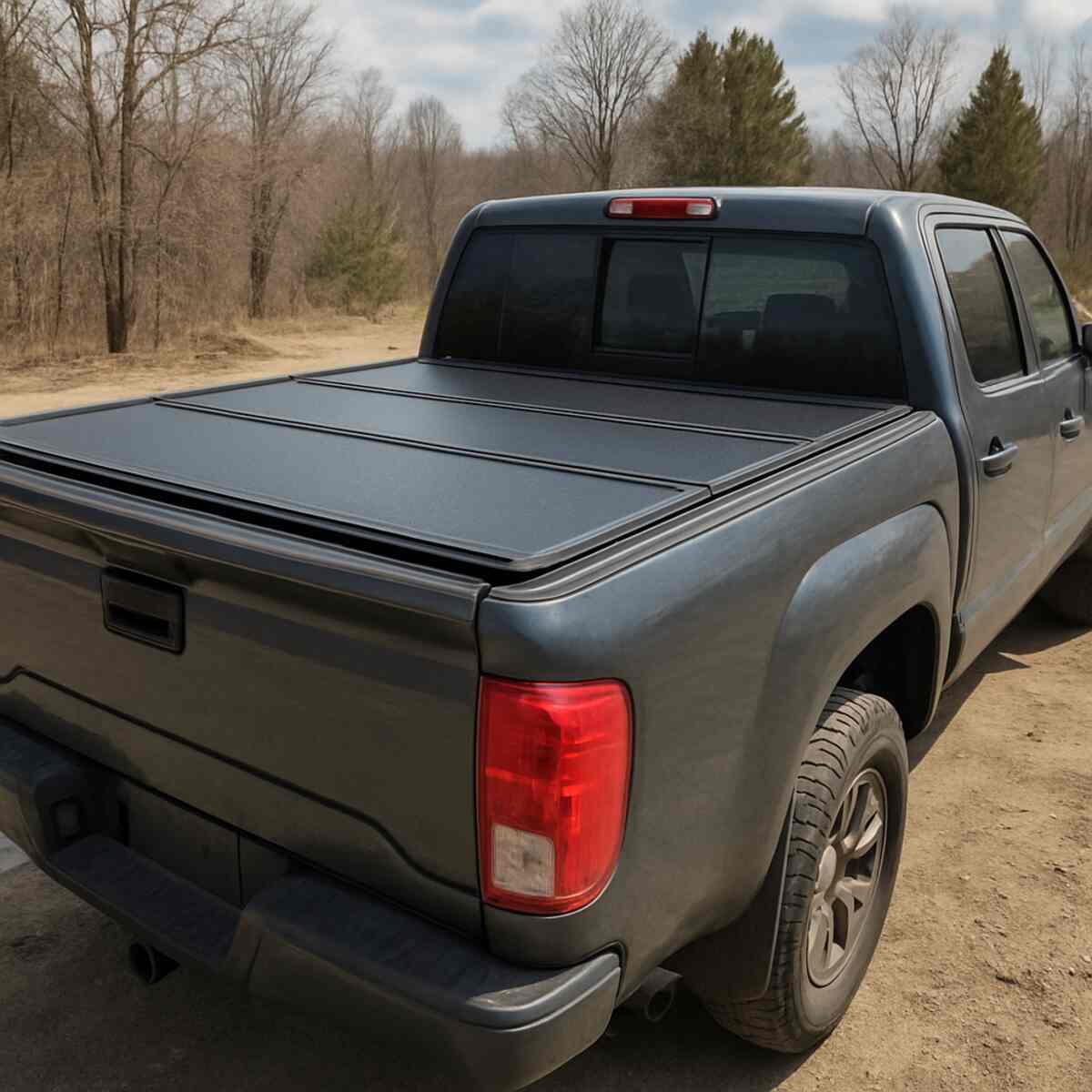

Upgrading your pickup truck with a bed cover is one of the most rewarding investments you can make. Not only does it instantly elevate the aesthetic appeal of your vehicle, but it also provides crucial protection for your cargo against unpredictable weather and potential theft. Among the myriad of options available on the market today, the quad fold tonneau cover has emerged as a premium choice for truck owners who demand versatility, durability, and uncompromising access to their payload. Select the best quad fold tonneau cover.
If you have recently purchased one of these incredible accessories, or if you are considering buying one and want to know exactly what the installation process entails, you are in the right place. This comprehensive guide will walk you through everything you need to know about preparing, installing, and maintaining your new cover.
Chapter 1: Understanding the Quad Fold Tonneau Cover
Before you grab your tools and head out to the driveway, it is helpful to understand exactly what makes this specific style of tonneau cover so highly regarded in the automotive community.
A truck bed cover, historically referred to as a tonneau cover, is designed to span the open cargo area of a pickup truck. While early iterations were simply pieces of vinyl stretched over a metal frame and snapped into place, modern engineering has brought us highly sophisticated, multi-panel folding designs.
The Evolution of Folding Covers
When comparing the vast array of styles, buyers frequently find themselves debating between hard folding vs soft rolling tonneau covers. Soft rolling covers are lightweight, economical, and easy to roll up to the bulkhead. However, they offer minimal security against a determined thief with a pocketknife and can sag under heavy snow.
Hard folding covers, on the other hand, are constructed from rigid materials that offer impenetrable security and heavy load-bearing capabilities. For years, the three-panel (tri-fold) design was the industry standard. However, truck owners began realizing that a tri-fold design inherently blocks the rear window when folded fully upright, or alternatively, leaves a third of the truck bed permanently covered when driving.
This brings us to the difference between tri-fold and four-panel truck covers. By dividing the cover into four slightly smaller panels rather than three large ones, a quad fold tonneau cover provides a tighter fold. This allows for maximum truck bed accessibility because the panels fold up smaller and tighter against the cab, freeing up nearly 100% of your bed space without obstructing your rearward visibility.
Premium Materials and Construction
High-quality quad fold covers are typically manufactured using heavy duty aircraft grade aluminum panels. This material provides an incredible strength-to-weight ratio. It is robust enough to withstand the weight of heavy snow accumulation—and in some models, even the weight of a person standing on top—while remaining light enough for one person to operate.
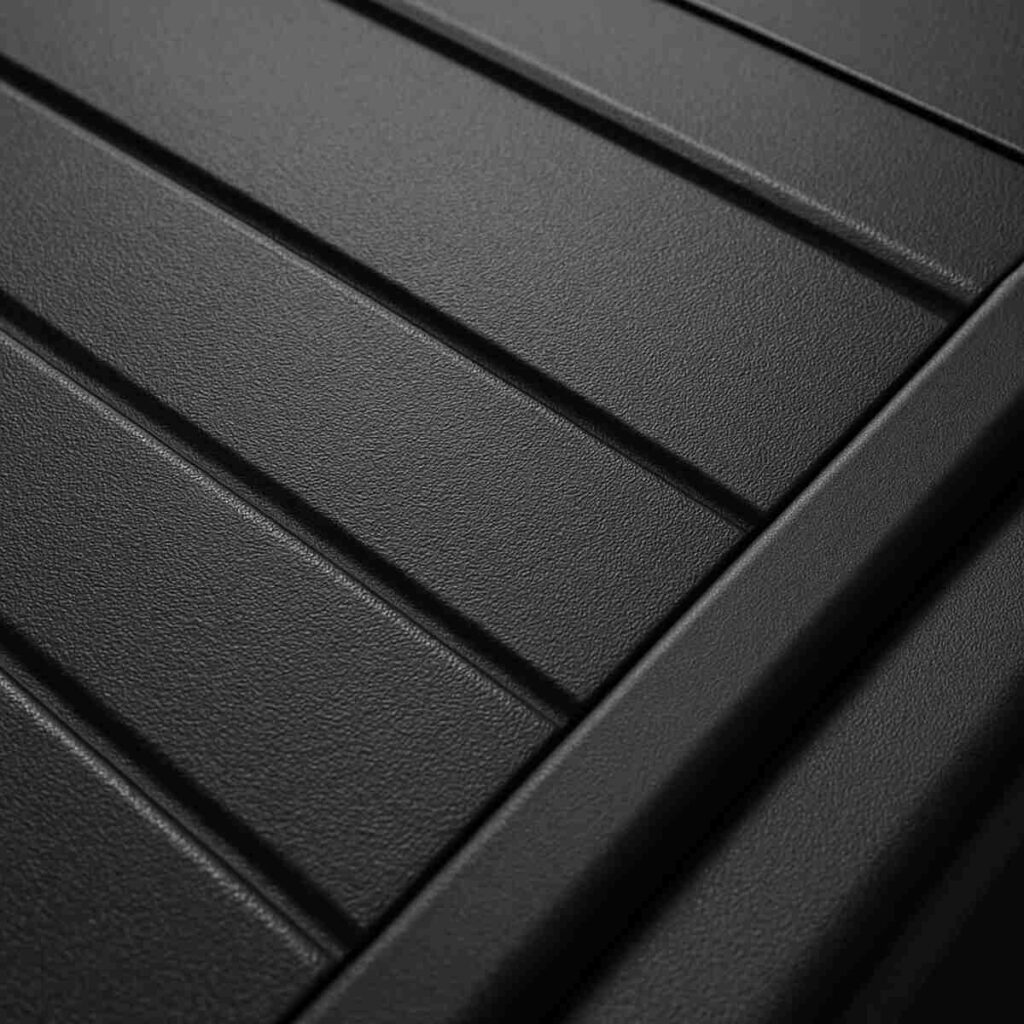
Furthermore, the exterior of these panels is often treated with a UV resistant matte finish protection. This specialized coating ensures that the cover won’t fade, chalk, or crack after years of baking in the summer sun, keeping your truck looking showroom-ready for the long haul.
Chapter 2: Pre-Installation Preparation
One of the greatest advantages of modern quad fold covers is their user-friendly design. In the past, installing a hard cover meant drilling permanent holes into your truck’s sheet metal. Today, most premium models utilize clamp-on no-drill installation systems. This means you can install, remove, and reinstall the cover without causing any permanent alterations to your vehicle.
However, a successful installation begins long before you open the box. Preparation is key to ensuring a flawless fit and maximum weather resistance.
Step 1: Measuring Your Truck Bed for a Custom Fit
Even if you are confident you know your truck’s specifications, measuring your truck bed for a custom fit is a non-negotiable first step before ordering or unboxing your cover. Truck beds vary not only by make and model but also by production year and specific trim packages.
Here is the correct way to measure your truck bed:
- Grab your tape measure: Use a standard metal measuring tape.
- Measure the inside length: Place the hook of the tape measure against the inside edge of the front bulkhead (the wall of the bed closest to the cab).
- Pull to the tailgate: Extend the tape straight back to the inside edge of the closed tailgate.
- Convert to feet and inches: Truck beds are usually categorized by approximate lengths (e.g., 5’8″, 6’5″, 8’0″).
Note: Do not measure from the outside of the exterior fenders, as this will give you an inaccurate, oversized measurement.
Step 2: Assessing Your Truck Bed Liner
Take a close look at your truck bed. Does it have bare painted metal, a spray-in liner, or a plastic drop-in liner?
- Spray-in liners: These generally present no issues for clamp-on tonneau covers.
- Drop-in plastic liners: If your plastic liner goes over the bed rails (an “over-the-rail” liner), you may need to trim small notches into the plastic where the clamps need to grip the metal lip of the truck bed.
- Utility Track Systems: Some trucks (like the Toyota Tacoma or Nissan Titan) come with factory-installed cargo rail systems. Ensure your tonneau cover kit includes the specific track-system adapter brackets, which are usually standard in vehicle-specific kits.
Step 3: Gathering Your Tools
Thanks to the clamp-on no-drill installation systems, you will not need a massive toolbox. For a standard quad fold tonneau cover installation, you generally only need:
- A clean microfiber towel and rubbing alcohol (for cleaning the bulkhead).
- Scissors or a utility knife (for cutting weather stripping).
- A basic socket set or wrench (often a 1/2-inch or 9/16-inch, depending on the manufacturer).
- A Phillips head screwdriver.
- A tape measure (for alignment checks).
- A second pair of hands (highly recommended for lifting the heavy folded assembly onto the truck).
Chapter 3: How to Install a Multi-Panel Folding Cover
Now we get to the core of the project. Learning how to install a multi-panel folding cover is a straightforward process that usually takes an amateur about 45 to 60 minutes. By following these detailed steps, you will ensure the cover is secure, aligned, and watertight.
Phase 1: Unboxing and Inventory
Find a large, flat, and clean surface—like a patch of grass or a clean garage floor. Carefully cut open the packaging. A quad fold tonneau cover is usually shipped fully assembled in its folded position.
- Remove the folded cover from the box.
- Locate the hardware box.
- Inventory the parts against the instruction manual. You should typically find front clamps, rear latching clamps, a roll of bulkhead weather stripping, and any specific rail adapters required for your truck model.
Phase 2: Weatherproofing the Bulkhead
Preventing water leakage in truck beds is one of the primary reasons truck owners invest in tonneau covers. However, the front bulkhead of many pickup trucks sits slightly lower than the side bed rails. If you simply place the cover on top without addressing this gap, water will easily channel into the front of your bed.
- Clean the top edge of the bulkhead thoroughly using rubbing alcohol and a microfiber towel. Remove all dirt, wax, and grease.
- Take the provided foam weather stripping and peel back a few inches of the adhesive backing.
- Start at one side of the bulkhead, pressing the sticky side of the foam firmly onto the metal.
- Work your way across the bulkhead to the other side, ensuring the strip remains straight and flush with the inner edge.
- Cut off any excess foam with your scissors.
Pro Tip: This foam seal is the most critical element of the weatherproof seals for folding bed covers. Take your time to ensure it creates a continuous barrier between the side rails.
Phase 3: Positioning the Folded Cover
This is where a helper makes things infinitely easier. The heavy duty aircraft grade aluminum panels make the entire assembly weigh between 50 to 70 pounds.
- Lift the fully folded cover and gently place it across the side rails of your truck bed, positioning it as close to the cab as possible.
- The smaller, front-most panel should be resting over the bulkhead you just weather-stripped.
- Center the cover from left to right. Look at the edges of the cover and ensure they overlap the truck’s plastic bed rail caps equally on both the driver and passenger sides.
Phase 4: Securing the Front Clamps
Once the cover is perfectly centered, you need to lock down the front panel. Depending on the brand, the front clamps will either be built into the panel itself or require you to slide a bolt through an aluminum channel.
- Crawl under the cover in the truck bed (or reach over the side).
- Locate the front clamping mechanism.
- Slide the jaw of the clamp down so that its lip catches the bottom edge of your truck’s interior metal bed rail.
- If you have a utility track, insert the provided aluminum adapter block into the track, align it with the clamp, and tighten it down.
- Hand-tighten the bolt or T-handle on the clamp until it is snug.
- Repeat on the opposite side.
- Once both sides are hand-tight, check your alignment one more time. If the cover hasn’t shifted, use your wrench to tighten the bolts completely. Do not over-tighten, as you could warp the metal or strip the bolt; firm, steady pressure is sufficient.
Phase 5: Unfolding and Checking the Fit
With the front anchored, it is time to deploy the cover to check its alignment over the entire length of the truck bed.
- Unclip the storage straps that hold the folded panels together.
- Gently fold the second panel down toward the tailgate.
- Continue unfolding the third and fourth panels until the cover is completely flat.
- Close your truck’s tailgate.
- Inspect the perimeter. The rubber fin seals along the edges of the cover should rest evenly flat on the truck’s bed rails. The rear edge of the final panel should overlap the tailgate just enough to create a seal, without hanging so far over that it impedes the tailgate from closing.
Adjustment Note: If the cover is too far forward or too far back, fold it back up, loosen the front clamps, shift the assembly slightly, and re-tighten.
Phase 6: Securing the Rear Clamps
Unlike the front clamps, which are bolted down semi-permanently, the rear clamps are designed to be engaged and disengaged daily. This is where you experience the low profile truck bed security.
- With the cover fully unfolded and the tailgate open, locate the rear latches on the final panel (the panel closest to the tailgate).
- These are typically spring-loaded pull-down clamps or rotary latches.
- Pull the latch down and slide it under the metal lip of your truck bed rail.
- Press firmly down on the top of the tonneau cover with one hand while locking the clamp into place with your other hand. This compresses the rubber seals and ensures a tight, vibration-free grip.
- Repeat on the opposite side.
- Close the tailgate.
Congratulations! You have successfully installed your quad fold tonneau cover. But the journey doesn’t end here; knowing how to use and maintain it properly is just as important.
Chapter 4: Cargo Management and Everyday Use
A pickup truck is designed for work, adventure, and everything in between. The primary reason you opted for a four-panel design over a standard one-piece fiberglass lid or a tri-fold is versatility.
Securing the Bed and Deterring Theft
When the rear clamps are locked down and your tailgate is shut and locked, your truck bed becomes a massive, secure vault.
Because the tailgate must be open to access the rear clamps of the tonneau cover, theft resistant locking mechanisms for pickup beds actually rely on your truck’s factory tailgate lock. If a thief cannot open the tailgate, they cannot reach underneath to release the cover’s latches. Furthermore, the rigid heavy duty aircraft grade aluminum panels cannot be slashed with a knife like soft vinyl covers can. This gives truck owners immense peace of mind when traveling with expensive tools, camping gear, or luggage.
Carrying Oversized Cargo with Folding Covers
Inevitably, the day will come when you need to transport a refrigerator, a dirt bike, or a load of tall furniture. Carrying oversized cargo with folding covers is remarkably easy, particularly with a quad fold design.
- Drop your tailgate.
- Release the two rear clamps.
- Fold the panels backward toward the cab, section by section.
- When you reach the final panel, you have two choices depending on your model:
- Option A: Leave it flat against the bulkhead and secure the panels using the integrated nylon buckle straps. This leaves the vast majority of your bed open.
- Option B: On premium quad fold models, you can fold the entire stack completely vertically against the back window. The cover will usually feature prop rods (struts) that snap into place to hold the heavy panels securely upright.
- Because it folds into four sections rather than three, the stack is thinner and sits lower, ensuring maximum truck bed accessibility without dangerously obstructing your third brake light or rear-view mirror.
Always ensure that when driving with the cover open, the panels are rigidly secured. Never drive with the cover only partially folded unless the intermediate panels are specifically designed to lock in place, as wind sheer can flip unsecured panels backward, causing severe damage to the cover and your truck.
Chapter 5: Weatherproofing, Sealing, and Protection
While no multi-panel folding cover can claim to be 100% waterproof in the face of a hurricane or a high-pressure fire hose, modern quad folds are highly weather-resistant. Understanding how weatherproof seals for folding bed covers function will help you keep your cargo dry.
Preventing Water Leakage in Truck Beds
Water is stubborn, and it will find the path of least resistance. The most common entry points for water in a truck bed are:
- The corners near the bulkhead.
- The gap between the tailgate and the side rails.
- The hinges between the folding panels.
Your new cover features rubber hinges and EPDM rubber fin seals along the perimeter. To optimize preventing water leakage in truck beds, consider these extra steps:
- Tailgate Seals: Tonneau covers seal the top of the bed, but most factory tailgates have massive gaps down the sides and along the bottom hinge. Purchasing an inexpensive roll of automotive tailgate weather stripping and applying it to the vertical gaps of your tailgate will dramatically reduce dust and water intrusion.
- Corner Putty/Silicone: If you notice a drip coming from the front corners where the bulkhead meets the side rails (a notorious weak spot on Fords and Chevys), apply a small dab of clear automotive silicone or butyl tape into the corner before clamping the cover down.
- Regular Seal Checks: Ensure the rubber fin seals on the sides of the cover are facing outward, not tucked underneath themselves, when you deploy the cover. The fin acts as a gutter, shedding rain over the side of the truck.
Chapter 6: The Aerodynamics Factor: Fuel Efficiency
A question that is endlessly debated in truck forums and coffee shops alike is: will a folding cover improve gas mileage?
The short answer is yes, but with caveats.
To understand why, we have to look at how air moves over a pickup truck. When you drive down the highway without a bed cover, the air flows over the cab and drops violently into the empty truck bed. This turbulent air crashes into the closed tailgate, creating a massive amount of aerodynamic drag. This drag acts like an invisible parachute, forcing your engine to work harder and burn more fuel to maintain speed.
By installing a sleek, flat tonneau cover, you streamline the vehicle’s profile. The air slides smoothly off the roof of the cab, glides directly over the UV resistant matte finish protection of your cover, and slips right off the back of the tailgate.
Will it double your MPG? No. Extensive wind tunnel testing and real-world driving data suggest that a hard folding tonneau cover can improve highway fuel efficiency by roughly 5% to 10%. For a truck getting 20 MPG, that is an extra 1 to 2 miles per gallon. Over the lifespan of the vehicle—and considering the high price of fuel—the tonneau cover can theoretically pay for itself in gas savings over a few years of highway driving.
Chapter 7: Maintenance and Long-Term Care
Your quad fold tonneau cover is a rugged piece of exterior hardware, but like the paint on your truck, it requires occasional maintenance to look and perform its best.
Cleaning and Washing
A very common question among new owners is: are four-fold truck covers car wash safe? The answer is overwhelmingly yes, but you must be mindful of the type of car wash you use.
- Touchless Washes: These are perfectly safe and highly recommended. The high-pressure water and soaps will clean the cover without damaging it. Note that the extreme pressure from the side jets might force a few drops of water past the rubber seals, so don’t be alarmed if your bed isn’t bone dry afterward.
- Soft Cloth / Friction Washes: While generally safe for the heavy duty aircraft grade aluminum panels, the massive spinning brushes can sometimes snag on rubber seals or catch the edges of the panels. Use these with caution.
- Hand Washing (Best Practice): The best way to wash your cover is in your driveway. Use the same automotive soap you use on your truck’s paint. Use a soft wash mitt to gently wipe away dirt, bird droppings, and tree sap.
Protecting the Finish
The exterior of your cover likely features a UV resistant matte finish protection. To keep it looking rich and dark:
- Do NOT use standard car wax. Carnauba waxes will dry white in the microscopic textures of the matte finish, making the cover look chalky and terrible.
- Use a matte-specific protectant. There are several automotive detailing sprays designed specifically for vinyl, rubber, and matte plastics (often labeled as Tonneau Cover Protectant or Aerospace Protectant). Spray it on a microfiber towel and wipe the cover down once a month. This will hydrate the finish, repel water, and block harmful UV rays.
Mechanical Maintenance
- Lubricate the Latches: Every six months, take a can of dry silicone spray or PTFE spray and give the hinges of the rear clamps a quick burst. This keeps the springs snapping tightly and prevents rust.
- Inspect the Clamps: Due to the natural vibrations of driving over potholes and rough roads, the bolts on your clamp-on no-drill installation systems can micro-loosen over time. Make it a habit to check the tightness of the front clamps every time you do an oil change.
- Condition the Seals: The weatherproof seals for folding bed covers are made of rubber, which can dry rot over time. When you apply protectant to the top of the cover, wipe a little bit onto the rubber side seals to keep them supple and flexible.
Chapter 8: Troubleshooting Common Installation Issues
Even with a detailed guide on how to install a multi-panel folding cover, you might run into a few minor hiccups. Here are the most common issues and how to resolve them instantly.
Issue 1: The Tailgate Won’t Close Properly
Cause: The tonneau cover is pulled too far backward toward the rear of the truck. Solution: Open the cover, loosen the front clamps near the cab, and push the entire assembly forward by about a quarter of an inch. Re-tighten the clamps and test the tailgate again. The seal should rest on top of the tailgate edge, not bind against it.
Issue 2: The Cover Appears Crooked
Cause: The truck bed itself might be slightly tapered (many modern trucks are wider at the cab than at the tailgate), or the cover wasn’t squared during step 3. Solution: Unfold the cover completely. Loosen the front clamps just enough so you can shift the cover. Nudge the rear of the cover left or right until there is an equal amount of rubber seal resting on the side rails on both sides. Carefully fold the cover back up without shifting it, and lock down the front clamps.
Issue 3: The Rear Clamps Keep Slipping Off
Cause: The clamp jaw is not seated deeply enough under the metal lip of the bed rail, or you have an interfering plastic bed liner. Solution: Ensure the jaw of the clamp is pushed as far inward (toward the outer sheet metal of the truck) as possible. If your plastic drop-in liner is blocking the jaw from reaching the metal lip, you will need to use a utility knife to cut away a small square of the plastic liner precisely where the clamp needs to grip.
Conclusion: Ready for the Road Ahead
Equipping your pickup with a quad fold tonneau cover is a transformative upgrade. By combining maximum truck bed accessibility with low profile truck bed security, you effectively turn your open cargo box into a versatile, weatherproof trunk that is ready for any job or adventure.
The beauty of this upgrade lies in its simplicity. Thanks to the ingenuity of clamp-on no-drill installation systems, achieving a professional-grade fit is easily within the grasp of any DIY enthusiast. By carefully measuring your truck bed for a custom fit, meticulously aligning the heavy duty aircraft grade aluminum panels, and maintaining the UV resistant matte finish protection, your cover will serve you reliably for the life of your truck.
Whether you are prioritizing preventing water leakage in truck beds during a cross-country road trip, carrying oversized cargo with folding covers from the hardware store, or simply hoping the aerodynamic profile will a folding cover improve gas mileage, you have made a brilliant choice. Enjoy the sleek new look of your rig, the peace of mind that comes with superior security, and the rugged utility of your newly installed quad fold tonneau cover. Safe travels and happy hauling!
