

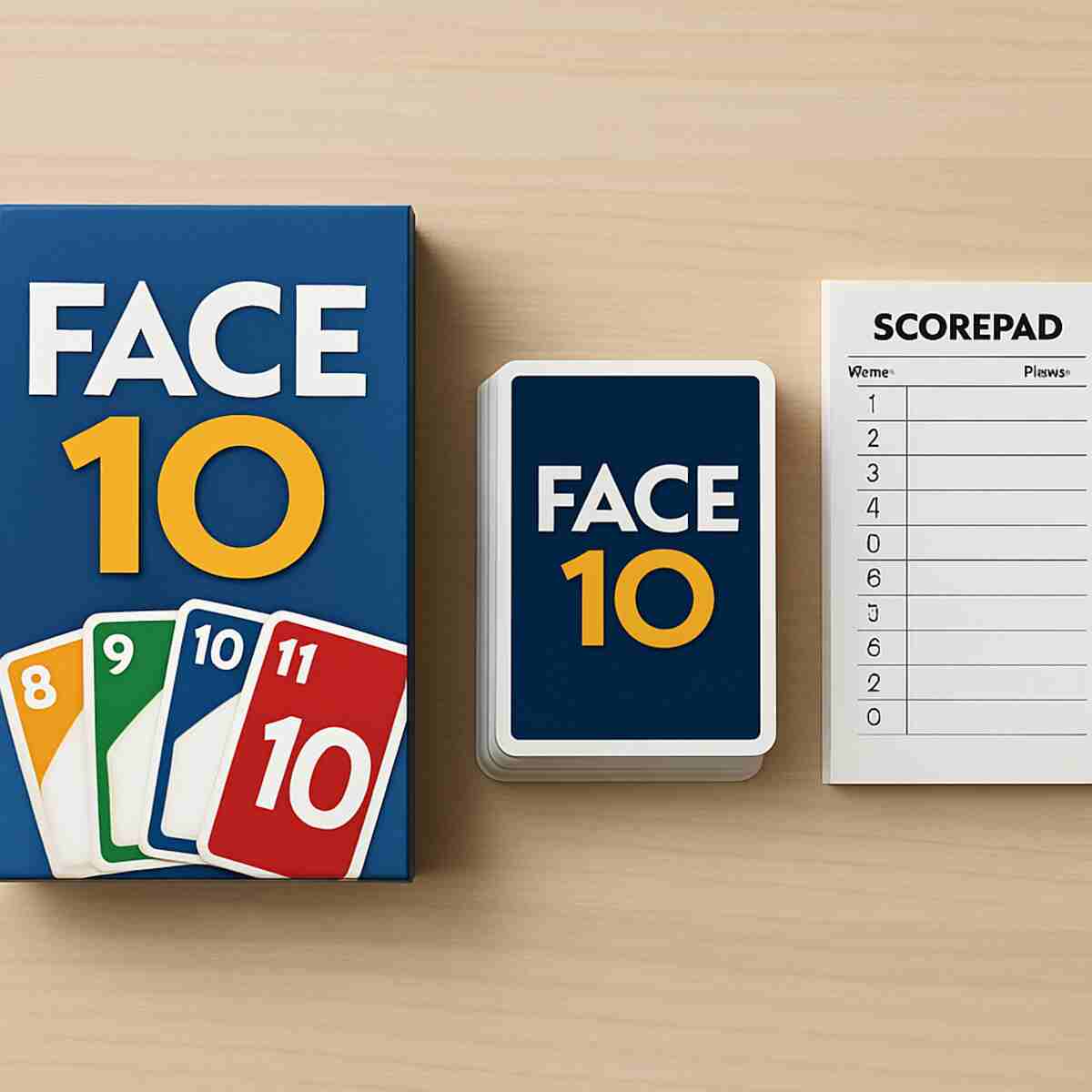

Looking for the perfect card game for your next family night? The Face 10 card game is a modern classic that’s wonderfully easy to learn but packed with exciting twists and comebacks. If you’ve ever enjoyed a game of Uno, you’ll find the basic rhythm familiar, but with one key difference that makes it uniquely addictive. This isn’t just a race to empty your hand; it’s a strategic mission. To find more, check on tangkai19
Your entire game revolves around completing a series of ten specific challenges, known as Phases. Think of them like levels in a video game that everyone must clear in order, from Phase 1 to Phase 10. Each successful round brings you one step closer to victory, while your opponents might get stuck trying to pass the same level again and again. Common player experience shows this creates thrilling moments where someone can leap from behind to take the lead.
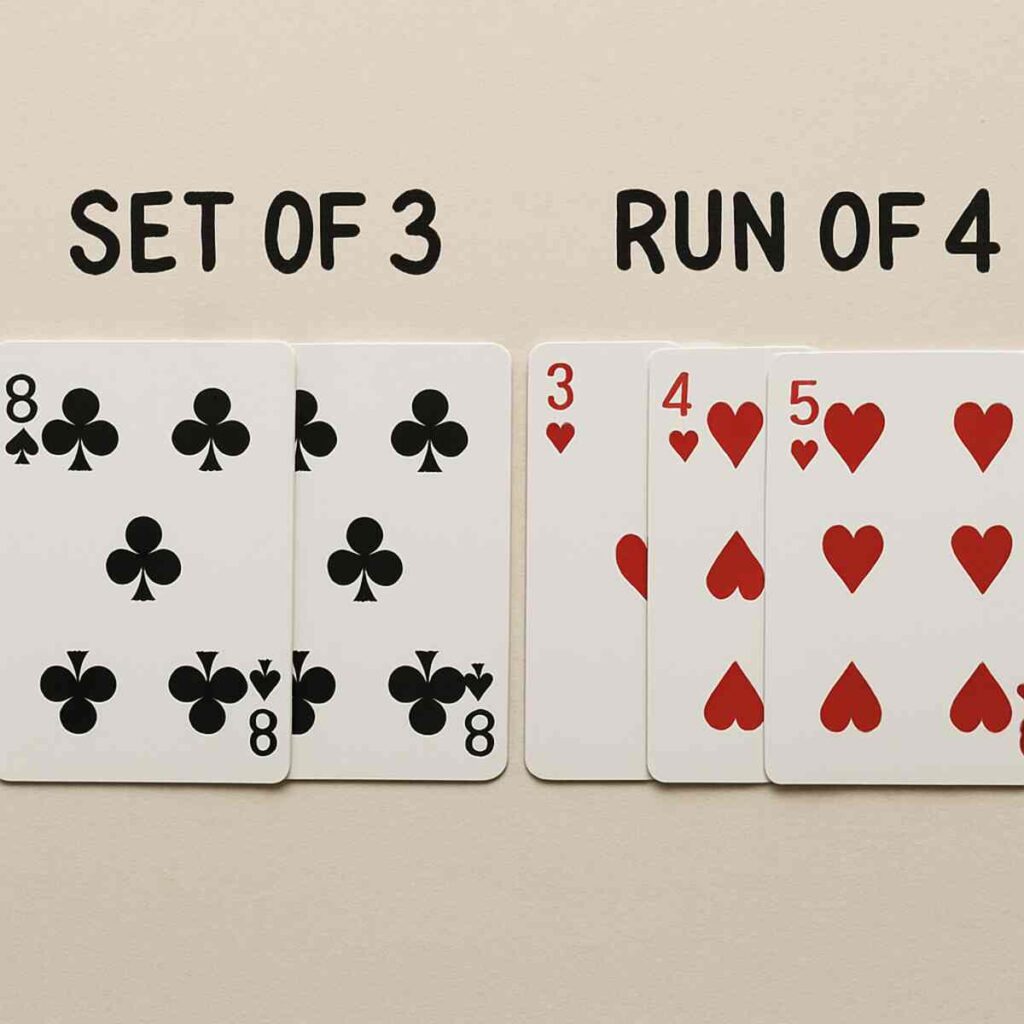
So, what are these Phases? They are specific combinations of cards you must collect. Most require you to build either a Set, which is a group of cards with the same number (like three 7s), or a Run, a sequence of numbers in order (like 4, 5, 6, 7). This guide will walk you through the setup, turn flow, and ultimate goal, getting you ready to deal your first hand in minutes.
Your First Game: How to Deal and Set Up for Any Number of Players
Ready to start your first round? The setup for Face 10 is quick and easy. First, choose one player to be the Dealer. This person shuffles the entire deck and deals out the cards. The best part? The dealing rule never changes, no matter how many people are playing.
- 2 to 6 Players: Every player gets 10 cards, dealt one at a time face down.
Once the cards are dealt, the game area needs to be set up. The dealer places the remaining stack of cards face down in the middle of the table. This becomes the Draw Pile. Next, they turn the top card of the Draw Pile face up and place it right beside the stack. This single face-up card starts the Discard Pile.
With the cards dealt and the piles created, you’re ready to play. The person to the immediate left of the dealer takes the very first turn. Play then continues clockwise around the table.
What Do I Do On My Turn? The Simple 3-Step Game Loop
Every turn in Face 10 follows the same simple rhythm, making it easy to learn. Think of it as a three-part cycle: first you draw a card, then you get a chance to play cards from your hand (if you can), and finally, you must discard a card. This simple Draw-Action-Discard loop is the heartbeat of the entire game. Once you master this sequence, you’ve mastered the flow of play.
Your turn always begins with a crucial decision: drawing a card. You have two choices. You can either take the top card from the face-down Draw Pile, hoping for something good, or you can pick up the top, face-up card on the Discard Pile. Taking from the discard pile is a great way to get a card you know you need, but be careful—it also signals to other players what you might be collecting! This is a core part of the game’s discard pile rules and etiquette.
After drawing and taking any possible actions, you must end your turn by discarding. To do this, choose one card from your hand and place it face up on top of the Discard Pile. This is not optional; your turn isn’t over until you discard. This signals that your turn is complete and play passes to the person on your left. This draw-and-discard loop is how you’ll slowly build the hand you need to tackle the game’s biggest challenge: completing a Phase.
The Official 10 Phases in Order (and What “Sets” and “Runs” Mean)
Now that you know how to build your hand each turn, what exactly are you trying to build? The answer is a Phase. Each Phase is a specific combination of cards, and these combinations are made of just two simple patterns: Sets and Runs. Understanding these is the key to the entire game.
- A Set is a group of cards with the same number (e.g., three 5s or four 10s). The colors don’t matter.
- A Run is a sequence of four or more cards in numerical order (e.g., 2, 3, 4, 5). The colors don’t matter for these, either. This is the basic meaning of a run in card games like Face 10.
Here’s the most important rule you need to know about Phases: you must complete them in order, from 1 to 10. Everyone starts the game trying to complete Phase 1. You cannot work on Phase 2, even if you have the right cards in your hand, until you have successfully completed Phase 1 in a previous round. Think of them like levels in a video game—you can’t skip ahead!
Ready to see what you’ll be collecting? Below is the complete, official list of what are the ten phases in order. Many players find it helpful to keep this list handy during the game.
Printable 10 Phases List
- Phase 1: 2 sets of 3
- Phase 2: 1 set of 3 + 1 run of 4
- Phase 3: 1 set of 4 + 1 run of 4
- Phase 4: 1 run of 7
- Phase 5: 1 run of 8
- Phase 6: 1 run of 9
- Phase 7: 2 sets of 4
- Phase 8: 7 cards of one color
- Phase 9: 1 set of 5 + 1 set of 2
- Phase 10: 1 set of 5 + 1 set of 3
Some of those later Phases can seem challenging. Thankfully, the deck includes special cards designed to help you complete these combinations much faster: the Wild and Skip cards.
Your Secret Weapons: How to Use Wild and Skip Cards Strategically
Just when a difficult Phase seems impossible, you’ll be glad to have a Wild card. A Wild is a true lifesaver, acting like a joker that can stand in for any card you need. For example, if you’re trying to build a set of three 4s but only have two, you can use a Wild as your third 4 to complete the set. The same is true for Runs—if you have 5-6-7-9, you can place a Wild card between the 7 and 9 to act as the 8, instantly finishing your run.
Beyond substituting for numbers, the Wild has another powerful use that provides some of the best advanced tips for phase completion. For Phase 8, which requires collecting seven cards of one color, a Wild can become any color you need. If you have six red cards and a Wild, your Phase is complete! This dual purpose makes the Wild the most valuable card in the deck, so think carefully about when to play it.
While Wilds help you, Skip cards are your primary tool for slowing down opponents. A Skip card is a simple but effective weapon: to use it, you simply place it on the discard pile at the end of your turn. The player whose turn is next is then “skipped” and loses their turn completely. The best strategy for using Wild and Skip cards often involves timing. If you see an opponent is close to finishing their Phase or is about to go out, playing a Skip can give you the extra turn you need to catch up.
Laying Down Your Hand: How to Complete a Phase and “Hit” an Opponent
That moment when you finally collect the last card for your Phase is a huge relief. Once you have the required cards, you can make your big move. During your turn (any time after you draw but before you discard), you can lay your completed Phase down on the table, face-up for everyone to see. For example, if you’re on Phase 1 (“2 sets of 3”), you would place your two sets, like three 5s and three 8s, in front of you. This is called completing your Phase, and it’s the most important step in any round.
Successfully laying down your Phase unlocks a powerful new ability for all your future turns: hitting. This is a critical part of how to play the 10 phase card game, but it comes with one very important rule. You cannot “hit”—that is, add a card to a completed Phase on the table—until your own Phase is already laid down. Trying to hit before your Phase is complete is a common mistake for new players.
So, can you hit on another player’s hand? Yes! Once your own Phase is on the table, you can get rid of extra cards in your hand by adding them to any matching Phase on the table—yours or another player’s. Imagine another player has a run of 4-5-6-7 on the table. If you have a 3 or an 8 in your hand, you can play it on their run during your turn. This follows the official rules for sets and runs, allowing you to play on either end of a run or add to any set.
The main reason for hitting is to empty your hand of cards as quickly as possible. Every card you play is one less card to get stuck with at the end of the round. In fact, playing your very last card this way is exactly how you end the round. This is known as “going out,” and it’s the ultimate goal once your Phase is complete.
How “Going Out” Ends the Round and How to Score Your Hand
The moment a player successfully plays the very last card from their hand, the round immediately ends for everyone. This is called going out. You can go out by playing the last of your cards on your own completed Phase or by “hitting” on another player’s. For example, if you have just one card left, a ‘7’, and you play it on an opponent’s existing set of 7s, you’ve just gone out and won the round! All other players must stop playing, even if they were close to finishing.
Once a player goes out, it’s time to tally points. Remember one key rule: you get penalty points for any cards left in your hand. The goal is to have as few points as possible. The player who went out gets a perfect score of 0 for the round. Everyone else adds up their remaining cards according to these values:
- Cards 1-9 = 5 points each
- Cards 10-12 = 10 points each
- Skip = 15 points
- Wild = 25 points
This might feel backward compared to other games, but the best way to win is to keep your total score low. After scoring, players who completed their Phase move on to the next one in the sequence for the following round. And what happens if you don’t complete a phase? You don’t get a penalty beyond your score for the round, but you must try to complete that same Phase again in the next round while others may have moved ahead. The game ends when one player completes Phase 10, and the person with the lowest overall score is crowned the champion.
From Rules to Wins: 3 Core Strategies for Your First Game
Knowing the rules is one thing, but playing to win is another. The single most important concept is this: focus only on your current Phase. It can be tempting to hold onto cards for a future Phase, like keeping a long run of cards when you only need sets. Don’t do it. Your only job is to complete the Phase in front of you as quickly as possible to ensure you move on to the next one.
A powerful skill to develop is watching the discard pile. It gives you clues about what your opponents are—and are not—collecting. If you see a player discard a ’10’, and then another ’10’ on their next turn, it’s a safe bet they aren’t trying to build a set of 10s. This information can help you decide which cards are “safe” to discard yourself, as they are less likely to be picked up.
You’ll also need a good strategy for using wild and skip cards, especially the high-value Wild. A Wild card is your best friend when it helps you complete your Phase immediately. However, it’s a 25-point ticking time bomb in your hand if someone else goes out. The longer you hold onto a Wild, hoping to draw the perfect combination, the greater your risk. If you don’t see a clear path to finishing your Phase soon, it’s often smarter to discard that Wild to protect your score.
Putting these simple strategies into practice—prioritizing your phase, reading the discards, and managing your risk—will dramatically improve your results.
Common Face 10 Questions Answered
As you play, certain “what if” scenarios will inevitably pop up. Here are quick, clear answers to the most common questions.
The single biggest question is: what happens if you don’t complete a phase? Don’t worry, you’re not out of the game! If another player goes out before you’ve laid down your cards, you simply have to try to complete that same phase again in the next round. Meanwhile, any players who did complete their phase will move on to the next one, which is how some players can get ahead.
While the game might feel like Uno at first, the core goal is completely different. Uno is a matching game where the primary goal is to empty your hand. In Face 10, the goal is mission-based. Your first priority is always to collect the specific cards needed for your phase; getting rid of cards is just what you do at the end of your turn.
Rules about “hitting”—or adding cards to phases already on the table—can also be tricky. Remember this simple rule: you can only hit on your own phase or another player’s phase after you have already completed and laid down your own phase for the round. You also cannot lay down a partial phase; you must have all the required cards (like both sets of three) in hand before you can play them.
From First Deal to Final Phase: Your Path to Winning
What might have seemed complicated is the simple, engaging rhythm at the heart of the Face 10 card game. You’ve moved beyond just reading rules; you understand the flow of a round, from drawing a card to laying down your completed phase, and you know exactly how to move toward victory.
This is where you gain a powerful advantage. While other players might get distracted trying to “go out” first every time, you now understand one of the core strategies to master Face 10. The best way to win isn’t always about speed; it’s about steady, relentless progress. The player who consistently completes their phase, round after round, is the one who will ultimately reach the final goal first.
You have everything you need to confidently lead your friends and family through their first game. You know the rules, you understand the goal, and you have the winning mindset. So gather everyone around the table, shuffle that deck, and get ready for the satisfaction of completing your very first phase.
